New Finno-Ugric Calendar 2027 on dugout boats

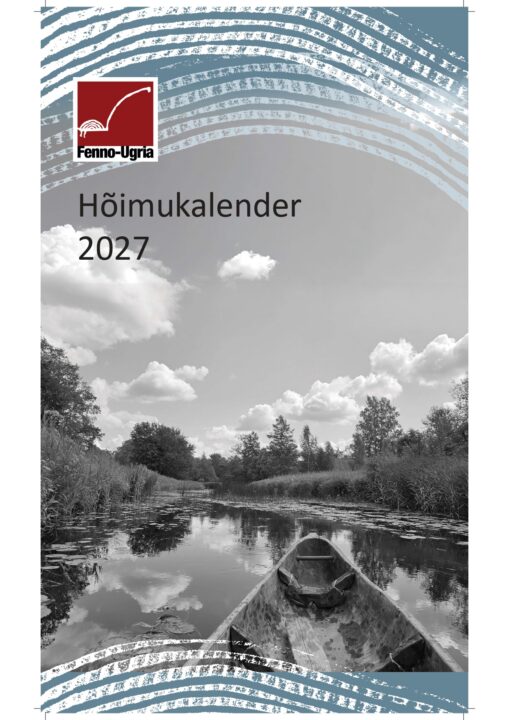
The Finno-Ugric Calendar for 2027 is dedicated to dugout boats, which have also been an important means of transport for the Finno-Ugric peoples. The calendar was compiled by Aivar Ruukel, who also discusses single-log boats in Pärnu and Tori, and was designed by the artist Kadi Pajupuu. The texts are in Estonian, English and Russian.
The Finno-Ugric Calendar 2027 has gone on sale on 15 August at the Pärnu Literature Festival in the Fenno-Ugria tent in Koidula Park, and a launch event will also be held at Haabjakoda in Tori on 25 August at 4 pm, where the calendar can also be bought. On 25 August, from 10 am onwards, you can watch the process of bending a boat using heat in front of Haabjakoda.
Dugout boats
From thick tree trunks, people have hollowed out watercraft all over the world. In many Finno-Ugric communities, these boats are still held in high regard today: they are used both for fishing on small forest lakes and for short local journeys.
Logboats are part of the Finno-Ugric heritage as well as part of their living culture. In distant times, when travel took place along waterways, boats were often the only means of transport. Lennart Meri writes in his book Hõbevalge that the thousand-year migration of Finno-Ugric tribes westward followed the tributaries of great rivers, using boats made from aspen trunks.
Logboats can be divided into two groups: the trough-shaped, more robust ruhi, and the pod-shaped haabjas with their bent sides. In the case of a ruhi, the width of the boat does not exceed the diameter of the log. The thinly hewn sides of a haabjas are spread apart using fire and water; in this way, a boat up to twice as wide as the original log is created.
The central theme of this calendar, from January to December, is the development of logboats – from the early simple dugouts to more complex, seaworthy sailing vessels.
FURTHER INFORMATION:
Aivar Ruukel
aivar.ruukel@gmail.com
ORDER:
info@fennougria.ee