From Estonia to Komi culture: Tallinn University’s Finno-Ugric course brought together participants from 20 countries
In July 2026, Tallinn Summer School hosted the course Introduction to Finno-Ugric Cultures and Nations, offering participants an opportunity to explore the history, languages, cultures, and contemporary situation of Finno-Ugric peoples. This year, the course brought together 33 participants from 20 countries and territories, creating a truly international setting for discovering the diversity of the Finno-Ugric world.
Participants came from the United States, Spain, the Netherlands, Portugal, France, Ireland, Estonia, Germany, Belgium, China, Poland, the United Kingdom, the Czech Republic, Singapore, Sweden, Croatia, Japan, Hong Kong, Canada, and Chile. The largest groups came from China and Germany, while the overall geographical reach of the course extended across Europe, Asia, North and South America.
As one of the countries at the heart of the Finno-Ugric world, Estonia provided a natural setting for exploring the diversity of Uralic peoples and cultures. The course was designed for a broad international audience and did not require previous knowledge of Finno-Ugric studies. It introduced participants to the historical and cultural connections between Estonians, Finns, Hungarians, Komi, Sámi, Mansi, and other Uralic peoples, while also addressing contemporary cultural and political developments.
Six Sessions: From History to Language
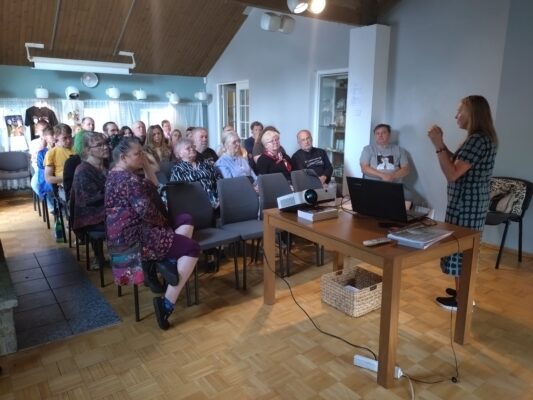
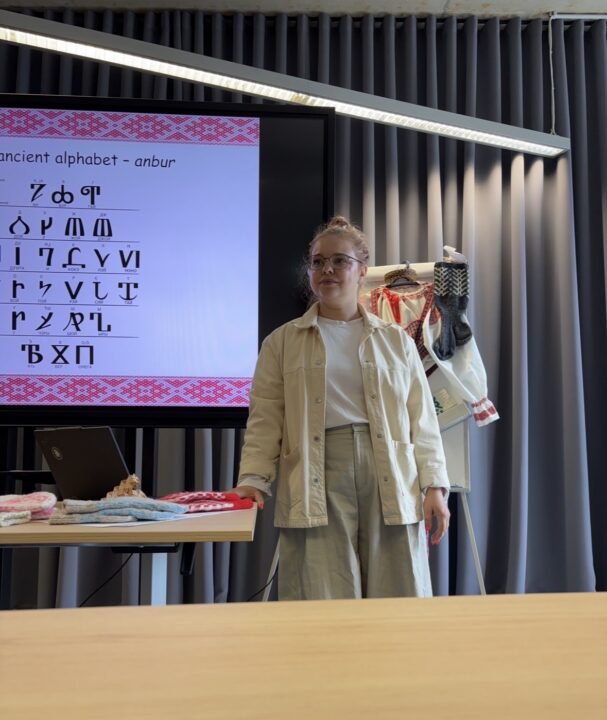
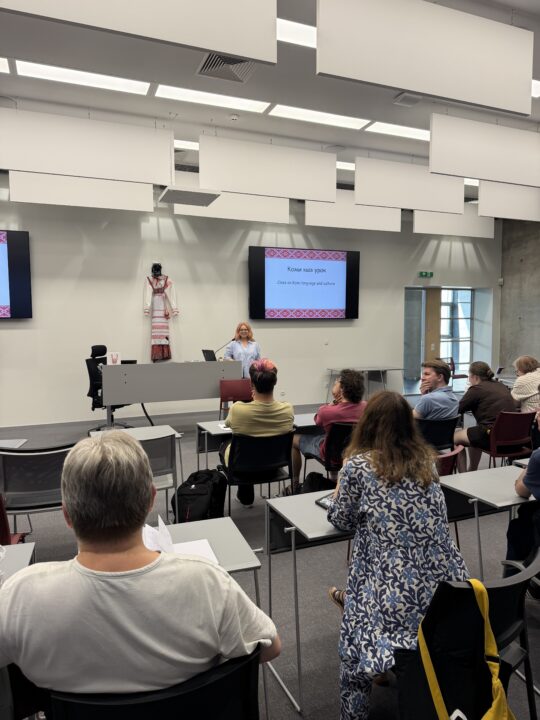
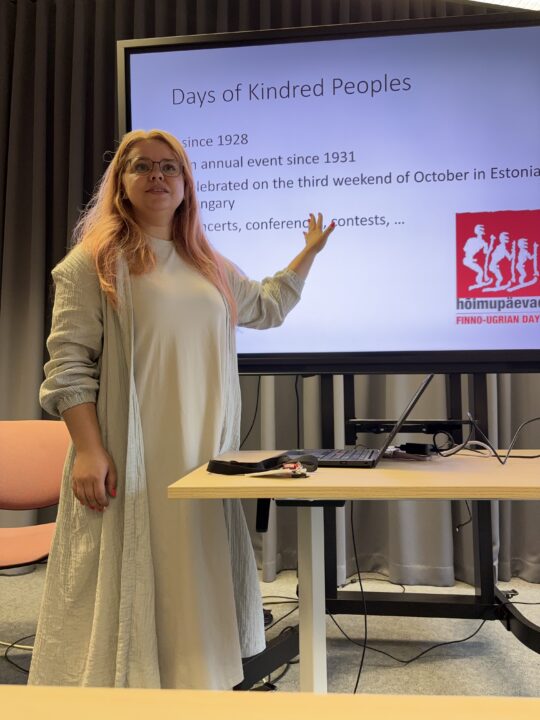
The academic programme consisted of six sessions held over three weeks, from 14 to 30 July. The course opened with Anna Kuznetsova’s lecture on the history, culture, and modern political developments of the Finno-Ugric peoples of Russia. Participants then explored the comparative history of Estonia, Finland, and Hungary, focusing on the historical processes behind the development of Finno-Ugric states. Another session examined the representation of Estonian national identity in the 21st century, while a separate lecture introduced participants to the history, culture, and language of Hungary. The lectures were complemented by seminars that offered an opportunity to explore both traditional and contemporary Finno-Ugric cultures in greater depth. The final session focused specifically on Komi culture and language.
This combination of topics allowed participants to approach the Finno-Ugric world from several perspectives — through history and statehood, national identity, languages, and both traditional and contemporary culture.
The Finno-Ugric World as a Space for International Dialogue
One of the distinctive features of the course was its combination of historical and contemporary perspectives. Finno-Ugric peoples were discussed not only from historical and linguistic viewpoints but also in relation to present-day political and cultural developments.
The international composition of the group added another important dimension to the course. Thirty-three participants from 20 countries and territories had the opportunity not only to learn more about Estonia and Finno-Ugric cultures, but also to discuss the course topics with people representing a wide range of cultural and academic backgrounds.
Particularly noteworthy was the interest in Finno-Ugric topics well beyond countries and regions traditionally associated with Uralic languages. Alongside participants from across Europe, the course welcomed students from China, Japan, Singapore, Chile, Canada, and the United States.
The course demonstrated how Finno-Ugric studies can bring together people from very different parts of the world and highlighted Estonia’s role as an important meeting point for international audiences interested in the history, languages, cultures, and contemporary life of Finno-Ugric peoples.
Info:
Tallinn Summer School
Tallinn Winter School
Anna Kuznetsova
anna@fennugria.ee
anna.kuznetsova@tlu.ee