Fenno-Ugria panel “Exile and Nationality” at Paide Opinion Festival
The Fenno-Ugria panel ‘Exile and Nationality’ at the Paide Opinion Festival on 8 August 2026 discussed national identity whilst away from one’s homeland.
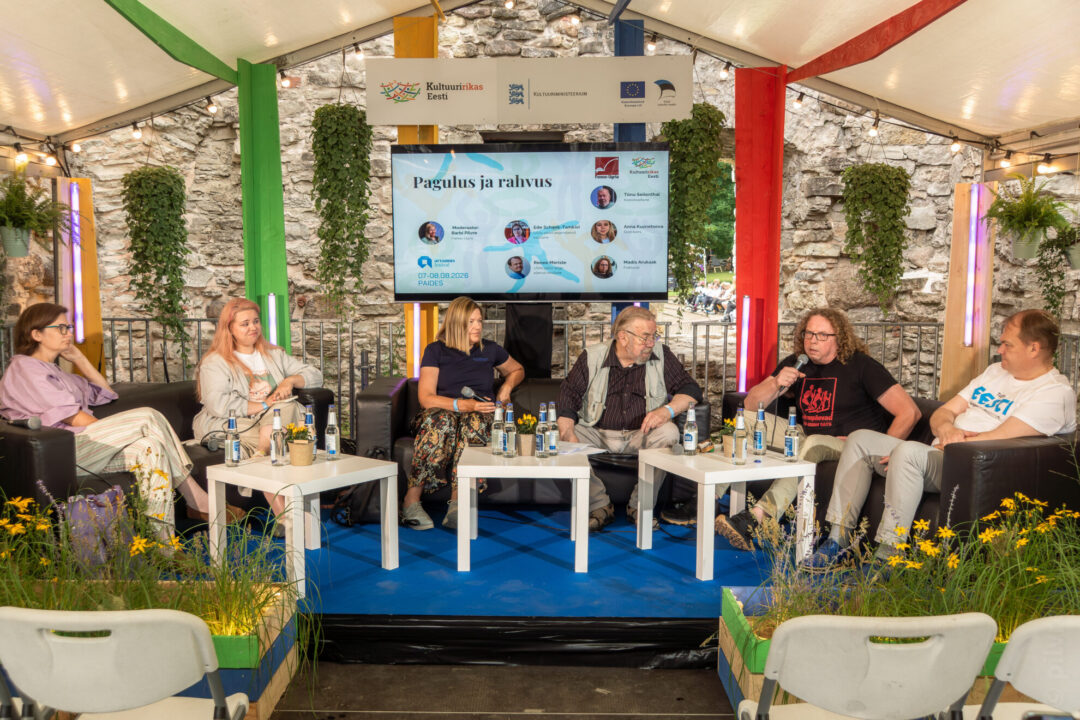
Fenno-Ugria took part in the Paide Opinion Festival 2026 in the ‘Cultural Diversity’ section with its own panel discussion entitled ‘Exile and Nationality’. Estonians who have lived in the USA – entrepreneur Renee Meriste and education professional Ede Schank-Tamkivi – along with Anna Kuznetsova, an Estonian Komi; folklorist and Associate Professor at the University of Tartu; Madis Arukask, Chair of the Fenno-Ugria Board; and Professor Emeritus at the University of Tartu, member of the Fenno-Ugria board and linguist Tõnu Seilenthal discussed why and how members of ethnic communities form a national identity whilst living away from their homeland. The Fenno-Ugria panel discussion was moderated by Barbi Pilvre, Director of Fenno-Ugria, and was organised by Fenno-Ugria in collaboration with the Ministry of Culture.
Foundation of Estonian identity
The Fenno-Ugria panel discussion started with Barbi Pilvre’s argument that Estonians’ national identity is linguistic and that proficiency in the Estonian language is the primary marker of nationality. Pilvre added that the Estonian understanding of nationality is, however, also linked to an imagined ‘bloodline’, as there are many Estonians around the world who do not speak Estonian but who consider themselves Estonian because one of their ancestors came from Estonia. Language is therefore not the sole defining characteristic of nationality. For example, Russians living in Estonia who speak Estonian are not considered Estonians, and the term ‘non-Estonian’ is also an official term in Estonia.
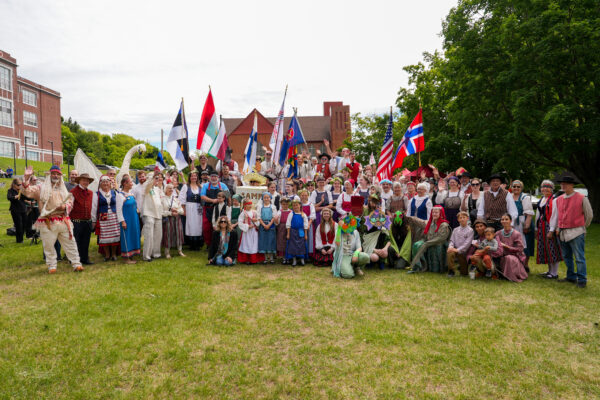
Pilvre spoke of a visit by representatives of Fenno-Ugria to this year’s Finno-Ugric Capital of Culture, Hancock, which has a large population of Finnish descent, and of Finnish-Americans, most of whom no longer speak Finnish. They consider themselves Finnish, and cultivate Finnish identity and customs. American Finns even sought to forget their own language in the 1920s and 1930s in order to integrate and succeed in the US. Among young people, however, there is an interest in their roots.
Estonian-Americans
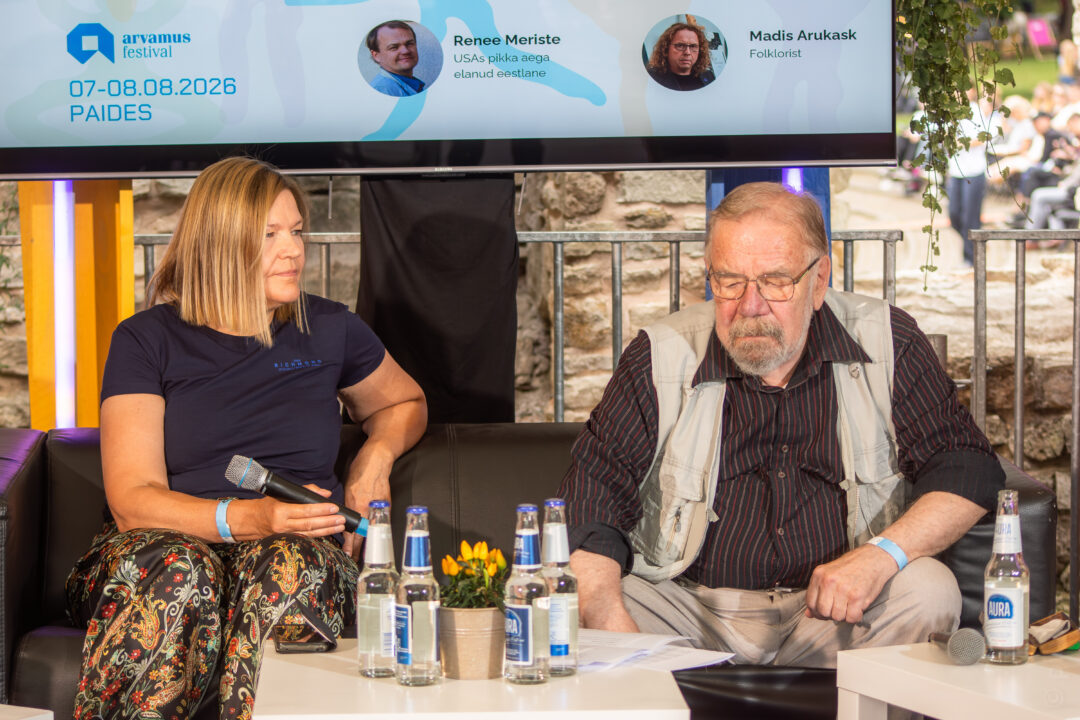
Renee Meriste and Ede Schank-Tamkivi, who have lived in California for many years, spoke at length about the Estonian community in the US. Language is generally considered important, but it is not the sole determinant of national identity. Traditions, social interaction and events are also significant. In the case of US citizens, one can speak of a dual national identity, which is often supported by dual citizenship. At the same time, proficiency in the mother tongue is very important to Estonians living abroad, and Ede Schank-Tamkivi confirmed that this can also influence, for example, the decision to return to the homeland if it becomes apparent that their children are beginning to forget their mother tongue.
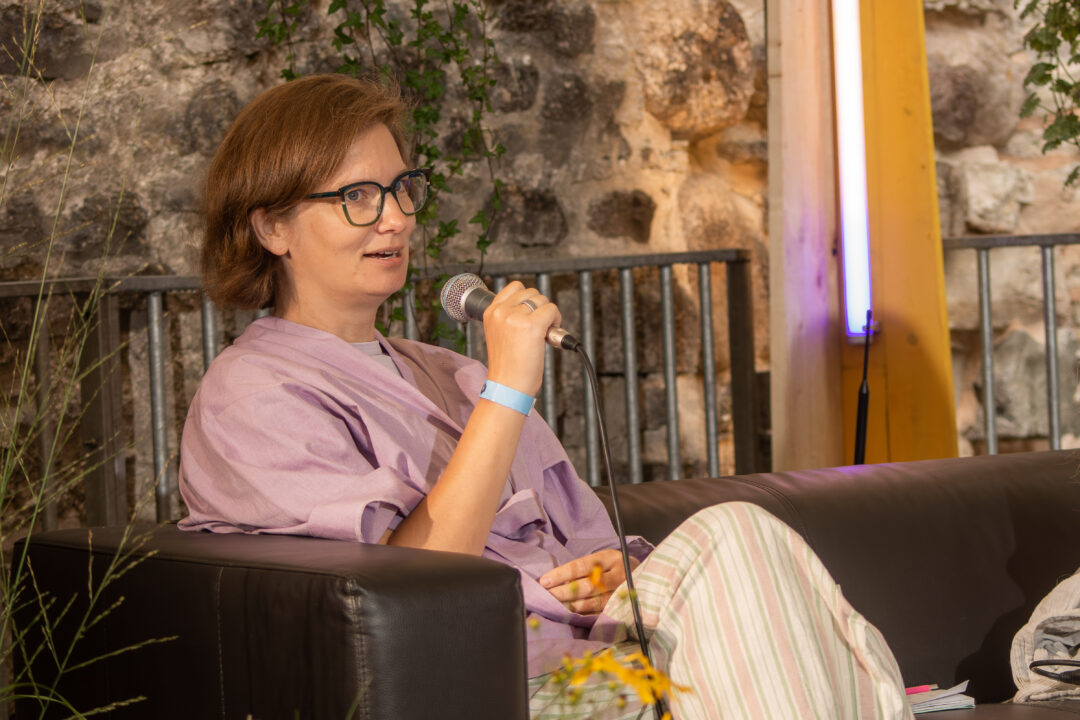
Tõnu Seilenthal explored the concept of exile using the example of Estonia’s Finno-Ugric communities, discussed their development, and concluded that language is, after all, an important part of identity, even if one does not speak it well.
Estonia’s Finno-Ugric communities have, for the most part, become Estonianised or Russified, yet they still consider themselves Udmurts, Komi or Mari. They socialise together, practise folk dancing and singing, and prepare traditional dishes. They often only learn their native language in Estonia, as proficiency in the national language is also weak in their historical homelands. In Russia, the Russian language dominates even in the so-called autonomous republics of minority peoples, including Finno-Ugric peoples; education is conducted in Russian, and representatives of minority peoples have a dual identity: as Russians and as members of their own ethnic group. Belonging to a minority group and speaking one’s own language are not considered prestigious.
Discussions at the Fenno-Ugria panel took place as to why this has come about, and why there has been a shift towards Russian culture. This has been influenced by Russia’s ethnic policy, which has consistently restricted the learning and use of minority languages. Whilst in Estonia, representatives of Finno-Ugric peoples have found their native language to have become more important; here, proficiency in one’s own language is valued, and the Estonian state (the Ministry of Culture) also provides financial support for Finno-Ugric Sunday schools. Food, folk dances and songs play an important role, even for those who do not speak their own language.
Other markers of identity
Sport can also serve to unite a community abroad, as is the case with cross-country skiing for Estonians and Finns. People even go cross-country skiing together in California, said Renee Meriste.
Religion can also form part of national identity; the church, as a place of gathering, brings Estonians in the USA together even when they are generally non-religious. Languages and customs are preserved in exile. The era from which people once departed is kept alive, as the Estonian Houses abroad clearly demonstrate. Certain old culinary traditions, which are unfamiliar to those living in their homeland, may take on new significance – for example, making blood sausage together – whilst the making or acquiring of traditional folk costumes also becomes important.
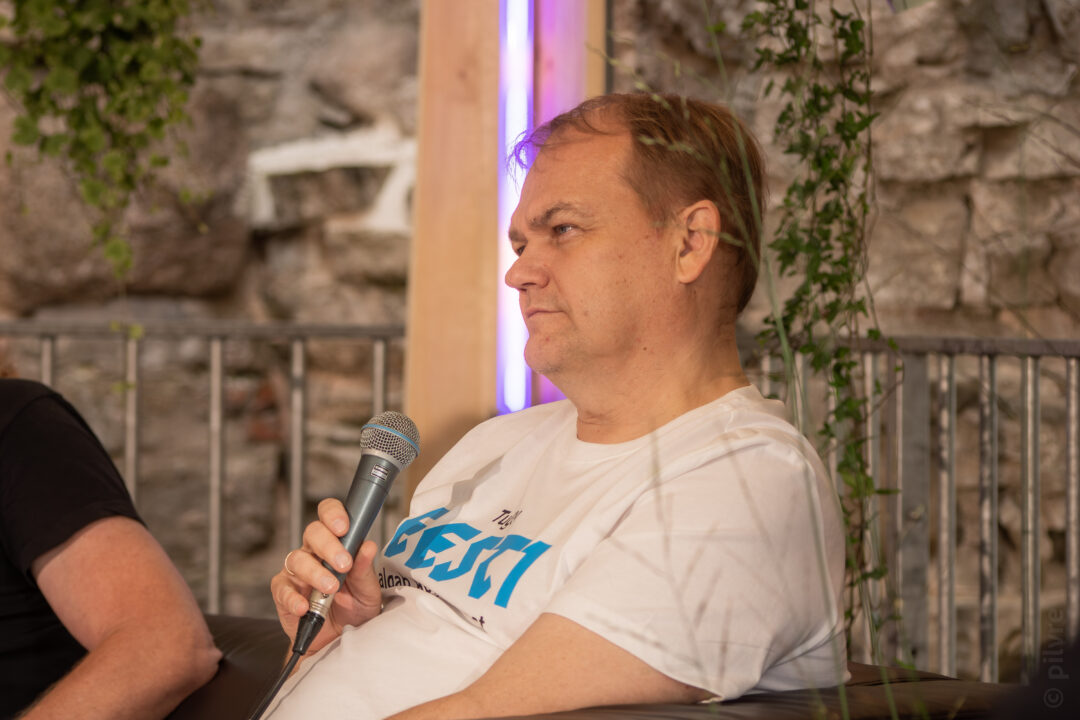
Religion is often an important part of identity. Examples can also be drawn from the identities of Finno-Ugric peoples. For instance, in the Karelia region, the Orthodox faith has distinguished the Karelians from the Finns, whilst Lutheranism has been an important part of the Ingrian people’s sense of national identity. Madis Arukask, a specialist in religions, spoke about this.
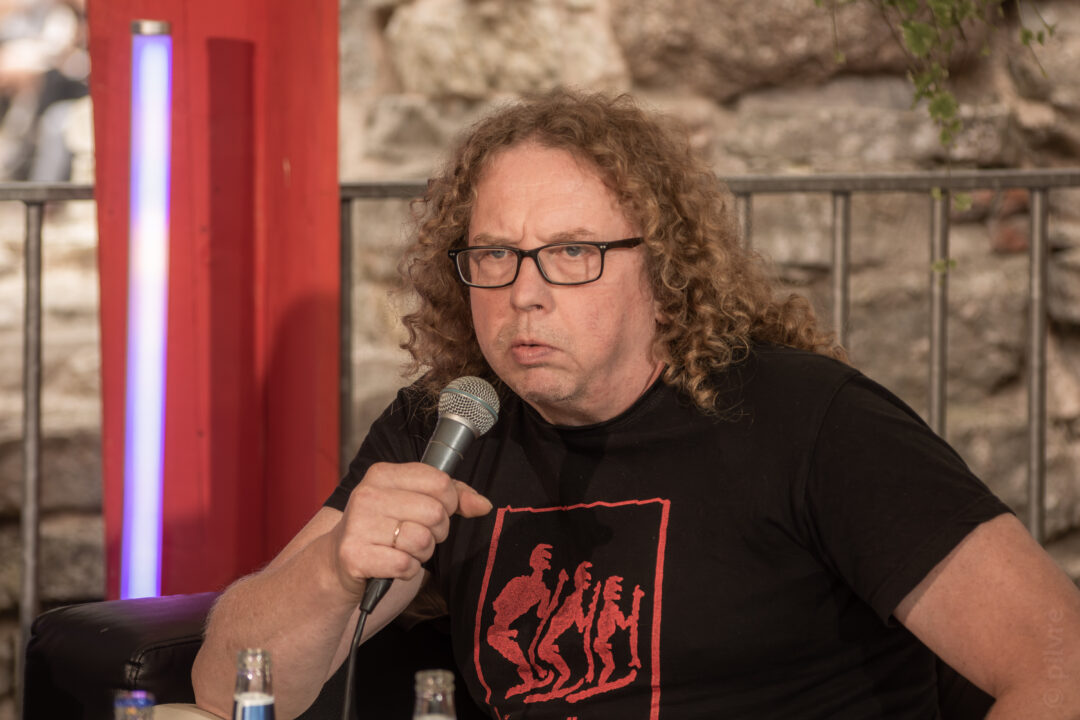
Throughout the entire period of the Estonian Soviet Socialist Republic, the resistance movement in exile – particularly in the US – played a vital role, providing Estonian communities with a unifying purpose. Even now that Estonia is independent, we must not forget the occupations, emphasised Ede Schank-Tamkivi, who works as the head of educational programmes at Vabamu Museum of Occupations and Freedom.
There is no sign of a resistance movement amongst Estonia’s Finno-Ugric communities, although a few individual national freedom fighters are active in the US and Western European countries. This is likely due to fear of the actions of Russia’s repressive authorities, which could result in family members living in Russia falling victim to such measures.
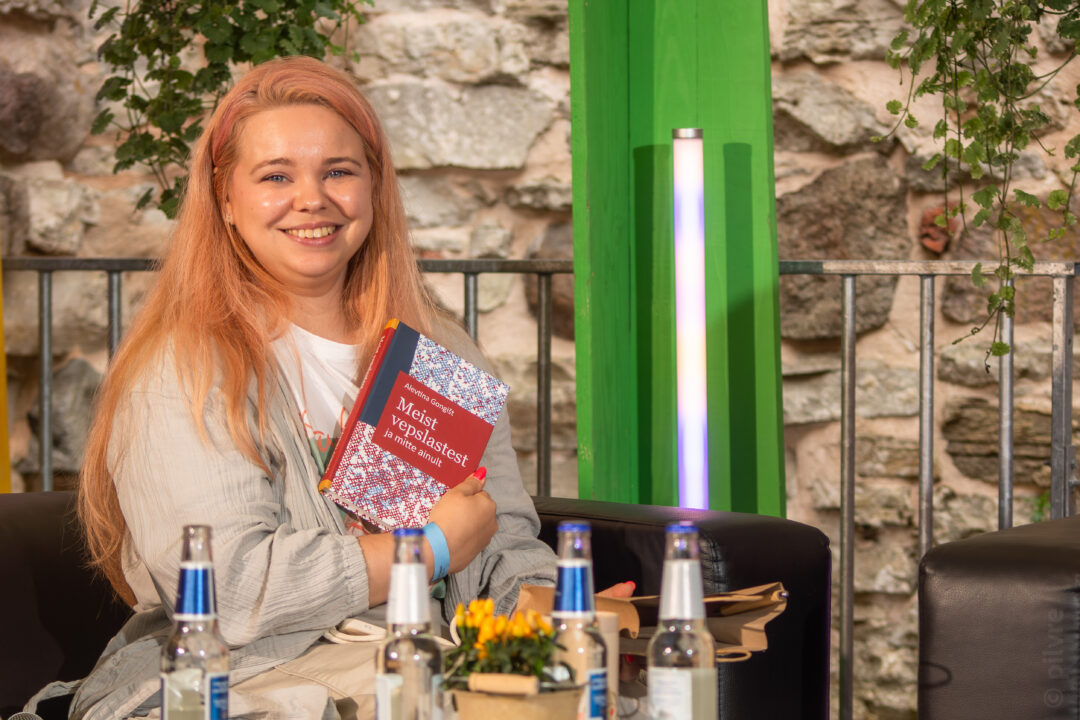
The Fenno-Ugria panel can be viewed on Youtube (in Estonian).
See also the photo gallery of the panel discussion.
FURTHER INFORMATION:
Barbi Pilvre
info@fennougria.ee