Children raised to become soldiers in Russia, especially the regions
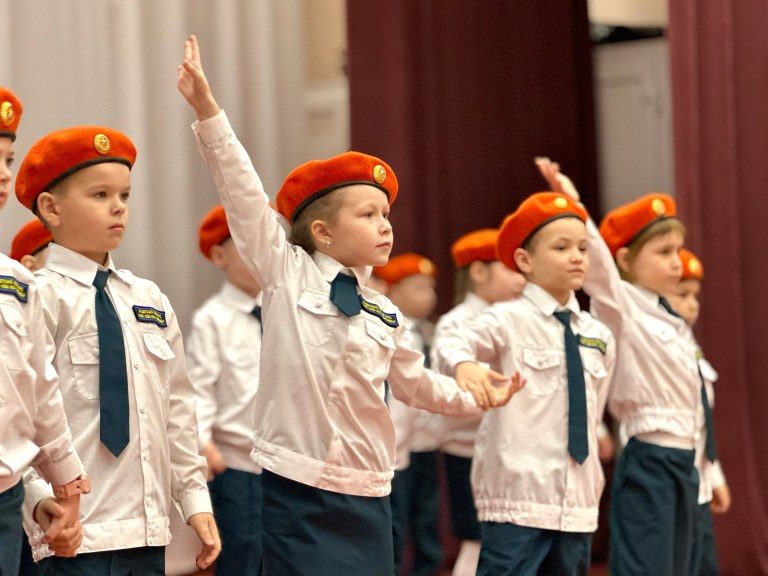
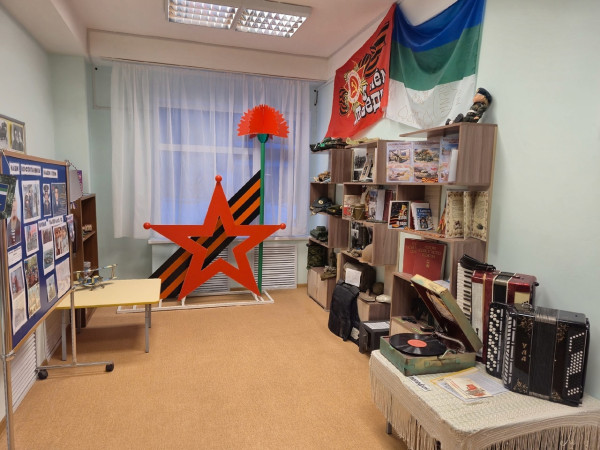
Year on year, the militarisation of society in the Russian Federation is becoming increasingly apparent. Symbols of war can be seen everywhere – in both urban and rural settings, in theatres, at art exhibitions and at concerts. These symbols have been brought into the present day from various periods, particularly the Second World War. The population is increasingly being led to believe that the Second World War did not actually end. In fact, it is still ongoing, and that the ‘special military operation in Ukraine’ is a continuation of the last world war.
War propagandists pay particular attention to children and young people: patriotic organisations are being set up in nurseries and schools. These, in turn, teach a hierarchical worldview, as well as marching in formation, shooting and unconditional love for the motherland. Military events take place in schools and nurseries every week, and veterans of the Russia-Ukraine war can be seen in educational institutions every day. They attend ceremonies, birthday celebrations and other special occasions, claiming that they are the successors of Second World War veterans. Although, sadly, almost all the Second World War veterans have passed away, they continue the work of those veterans.
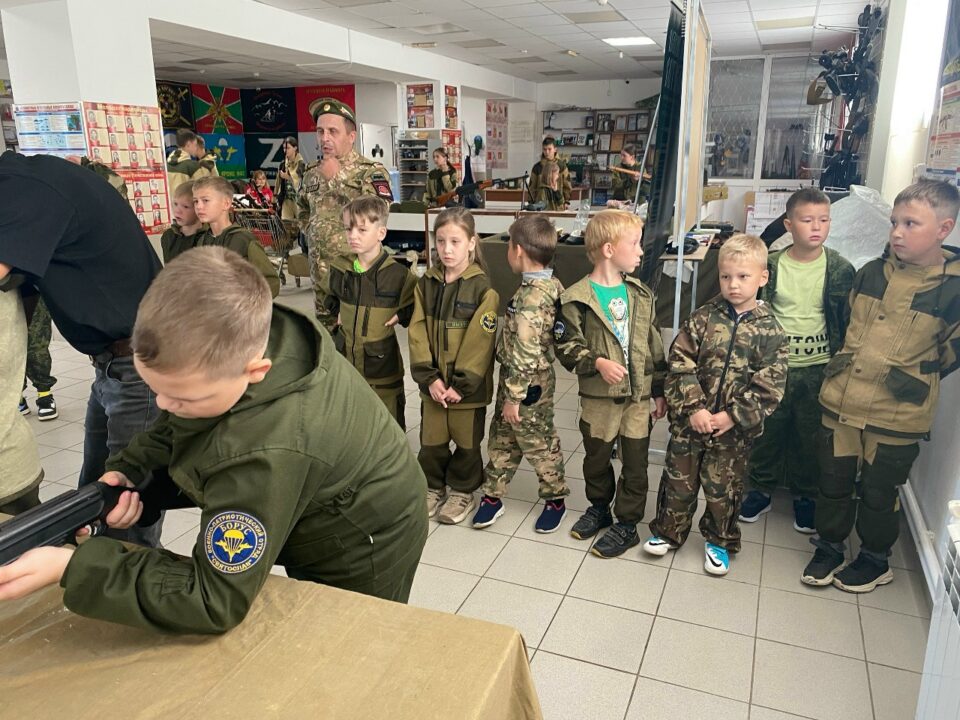
To understand how war propaganda is carried out in schools, using one region as an example, Jaak Prozes translated an abridged form of Vika Lampovaya’s article on the topic. The title is “The theme of war accompanies children from nursery school right through to the end of their schooling. In Uniform from Childhood”. It provides a good overview of the spread and content of propaganda in educational institutions in Komi.
Power politics is part of the education system
The Russian education system incorporates patriotic lessons in nurseries, school events, ‘Conversations on Important Matters’, the ‘Zarnitsa’ – ‘Heat Lightning’ military game, cadet classes, ‘Lessons in Bravery’ and meetings with the security forces. Over the past five years, military-patriotic and security-related topics have become an integral part of the educational environment in Komi. They are no longer isolated events, but a continuous progression: nursery school → patriotic education → cadet classes → military-patriotic club → a career in the security forces.
The cadet network is developing very rapidly. In 2021, a cadet group was active at one nursery school in Syktyvkar, No. 112. By 2023, such groups had already been set up at three other nursery schools. In the spring of 2026, the Syktyvkar administration announced that the ‘cadet traditions’ brought together 896 children from 40 groups across a total of 21 nurseries. In schools, the scale of cadet organisation is even greater. According to a decree by the Syktyvkar administration, 160 cadet classes and groups began operating in Syktyvkar this year, across a total of 37 educational institutions.
In an interview with the Komi Daily newspaper, Yuri Lapshin, a school psychologist and former head of the psychological service at a Moscow school, suggests that what is happening in the republic should be viewed as a regional manifestation of a broader process. He defines propaganda as a set of measures aimed at promoting certain viewpoints and increasing loyalty to the state and to the contemporary interpretation of the country’s history. The psychologist notes that, in the Russian context, one of the central ideas is that of the state as a ‘unique civilisation’. This is constantly ‘surrounded by enemies’ and therefore requires protection and the sacrifice of its citizens.
Creeping militarisation
At the same time, military-patriotic education did not begin in 2022. According to the psychologist, many initiatives had already emerged earlier at grassroots or regional level. For example, children’s parades and various military-patriotic programmes. The same federal initiatives could be promoted with varying degrees of intensity in different regions and schools. Whether a proposal became actual school practice or remained a mere formality often depended on the headteacher. At the school where Lapshin worked, they received a police enquiry roughly once a quarter. They asked how many pupils were in the school’s ‘Youth Army’ (‘Yunarmiya’) unit. However, there was no such unit at the school, and the administration replied that there wasn’t. The psychologist acknowledges that in another town or school, such enquiries might have been perceived as a signal to set up such a unit.
He describes this process as ‘creeping’: initially, the practice is optional. Then it spreads more widely, and only then does a new norm begin to be recognised.
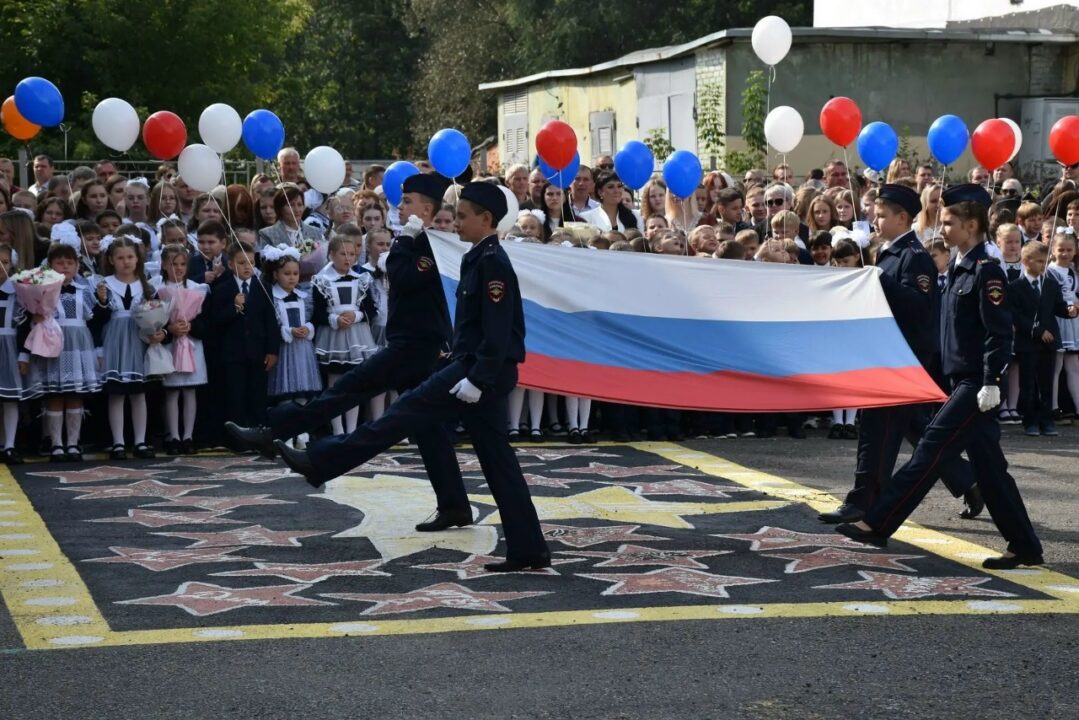
Following the outbreak of Russia’s full-scale war against Ukraine, standardised national rituals were introduced into the system. Since September 2022, all schools have implemented ‘Conversations on Important Matters’ every Monday. Also, the school week begins with the national anthem and the raising of the flag. The Ministry of Education listed the official aim of these lessons as fostering values, patriotism and national pride. As Yuri Lapshin recalls, some schools and teachers initially treated the new requirements rather superficially. A maths teacher might say to the children: “Today we have ‘Conversations on Important Matters’, but as algebra is the most important thing, take out your exercise books – we’re having an algebra lesson.” Since then, most schools have been monitoring how the requirements for patriotic education are being met.
Why is fostering patriotism started from as young as possible?
A teenager might approach an ideological event with irony. They might make a joke of it, turn the slogan into a meme, go through the motions of complying with an adult’s demand, and then forget the whole thing. According to Yuri Lapshin, he has observed a similar reaction to the national action plan amongst schoolchildren as well.
It is different with younger children. “Young children – they are supposed to trust adults, and they do. They come to school with the feeling that they are standing before a teacher who tells them the truth, who teaches them how to live,” notes Lapshin. It is precisely for this reason, according to Yuri Lapshin, that shifting patriotic education towards primary school and then towards pre-school fundamentally changes the situation. A young child does not necessarily yet distinguish between ‘the teacher’s opinion’, ‘the state’s position’ and ‘fact’. For them, an adult whom their parents and the school trust is an authority figure in their own right.
Becoming a cadet as the new normal
In 2024, there were 36 cadet classes and 37 cadet groups operating in Syktyvkar. Then, the system already comprised over 800 children. The establishment of the first cadet classes under the auspices of the FSB Directorate was a significant step. The security agency entered the school environment not as a guest, but as a permanent participant in the educational process. At School No. 1 in Syktyvkar, 48 pupils in Years 1 and 5 took the cadet oath and received epaulettes; representatives of the FSB (Federal Security Service of the Russian Federation) directly linked this to the opportunity to later enrol in a relevant higher education institution specialising in this field.
The initial intake of 800 pupils has now been exceeded. For the 2026/27 academic year, the city’s plan envisages 160 cadet classes and groups, with over 3,000 pupils. Olga Brigida, head of the city’s education department, noted that some cadets have already decided to pursue a career in law enforcement. The classes are indeed taught by specialists from law enforcement agencies.
The authorities themselves make no secret of the fact that the cadet movement forms part of career guidance. An official report by the Syktyvkar administration described the teaching carried out in the cadet classes as a means not only of patriotic education. It also motivates schoolchildren to enter military and public service.
Patriotism at the expense of survival skills
At the same time, critics point out that in 2025, four children drowned in the waters of the Komi Republic. Also, 146 children were injured and two died in road traffic accidents. Schools do teach road safety, water safety and first aid. Yet, compared with patriotic education, these subjects are given far fewer lessons. Why does the state invest so much in drill exercises and preparing children to defend their homeland, whilst the skills that are most important to them are pushed into the background?
Children play out war themselves
Children take part in the military game ‘Zarnitsa 2.0’ from the age of seven. They learn first aid, practise drill exercises and take part in military-patriotic games. Older children are assigned roles as fighter pilots, drone operators, sappers and signalmen. The official aims of ‘Zarnitsa 2.0’ are basic military training and readiness to defend the country.
Psychologist Yuri Lapshin believes that the format of the game is crucial. Children are not told about the appeal of military service. They are simply offered a team, a competition, a role, equipment and the chance to win. “Children are interested in taking part in the game. They aren’t just playing some abstract military-sports game – they are playing this war with its own specific characteristics.” According to the psychologist, the game resembles the evolution of classroom competitions to a much higher level. It increasingly resembles modern warfare, with real Russian and Ukrainian war veterans being brought in as mentors and organisers.
Symbol of the past
In Ukhta, a monument stands to Pavlik Morozov. He is a child whom Soviet propaganda held up as a paragon of loyalty to the state. According to the official version, the thirteen-year-old Morozov turned against his father, reported his crimes to the authorities, and was subsequently killed by his relatives. After his death, the story became the subject of a cult of personality. Articles were written about him in newspapers, books were published, monuments were erected, Pioneer groups were named after him, and the boy himself was held up as a role model for schoolchildren. Historians later proved that much of his biography had been fabricated by the propaganda machine.
Yuri Lapshin recalls a study on generations of Germans who grew up under the Nazi regime. The authors of the study, economists Nico Voigtländer and Hans-Joachim Voth, analysed surveys of the German population conducted decades after the war and found significantly stronger anti-Semitic attitudes among the generations who had been exposed to Nazi indoctrination during their childhood. The authors concluded that school education likely played a particularly important role.
Who is allowed to educate the children?
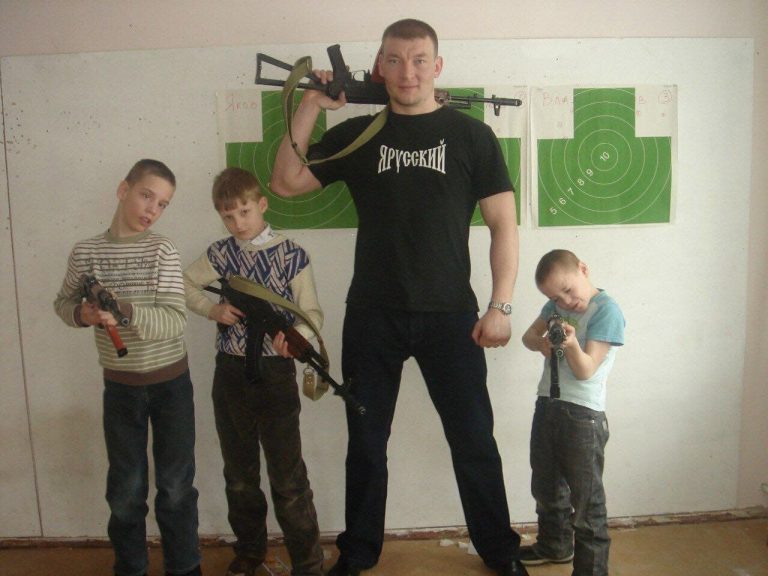
In addition to teachers and education staff, access to children’s education is also granted to people with very specific political views and pro-war attitudes. One such person is Leonid Krasnopyorov, head of the ‘Yunarmiya’ headquarters in Ukhta. He has been involved in military-patriotic education for many years. Even before working at the regional Ministry of Education, Krasnopyorov organised a military camp for cadets, the programme of which included hikes in full kit, paramilitary relay races and knife-fighting training. He himself described this camp as ‘preparation for military service’.
In 2016, whilst already an employee of the Komi Ministry of Education, he called Arsen Pavlov, the commander of the Donetsk rebel forces, known by the nom de guerre ‘Motorola’, a ‘modern-day hero’. Seven years later, in 2023, a guard unit was established at the ‘Yunarmiya’ creative centre he ran, this time dedicated specifically to the memory of Motorola. Following the outbreak of full-scale war, Krasnopyorov publicly supported “partial mobilisation”. In September 2022, he called on people not to evade mobilisation. He also stated that the President’s decree on the matter should be treated as a military order that was not open to debate.
War veterans as teachers
Krasnopyorov is no exception. Since 2022, war veterans have increasingly been given direct access to children. In March 2025, war veterans visited the Katolikov children’s home in Syktyvkar: they shared their combat experiences, demonstrated their equipment, and a drone instructor also took part. In July 2025, a ‘Lesson in Manliness’ (‘Urok muzhestva’) was held for children at School No. 18. They were shown equipment used in combat.
The children being taught and brought up are getting younger and younger. For example, at School No. 24 in Syktyvkar, a military-patriotic organisation is already working with children as young as five. In February 2026, the head of the Komi Republic, together with Russian Hero Stanislav Kotchev, held a ‘Lesson in Manliness’ at School No. 36. In 2024, Russia’s Minister of Education, Sergei Kravtsov, spoke to war veterans about the importance of visiting schools, educating children on the aims of war, and conducting ‘Lessons in Manliness’. At the same time, the department he headed discussed the professional retraining of people. In 2025, war veterans were awarded the qualification of ‘continuing education teacher’ to lead military-patriotic clubs in schools. Over the past year, visits by war veterans to schools have become increasingly frequent.
Why could the pressure of war and patriotism be felt more strongly in the regions?
According to Yuri Lapshin, school administrations and local educational authorities in the regions often demand stricter implementation of patriotic programmes. A teacher may well be sceptical about some teaching materials, but still shows them to the children and explains them. There is another reason: outside Moscow, the war often becomes an integral part of schoolchildren’s family lives, as it is from these very places that people are sent to war, both under contract and through mobilisation. Teachers must bear in mind – or be aware – that in their classes there are children from families whose fathers signed up, went to war or died. According to Lapshin’s observations, whilst the war may remain a distant concept for many schoolchildren in Moscow, in the regions it is more often associated with a specific father, relative or neighbour – someone from the child’s immediate circle.
What if the child doesn’t want to participate?
The cadet groups in Syktyvkar nursery schools are reportedly formed with parents’ views in mind. In all Russian schools, a lesson entitled ‘Conversations on Important Matters’ is held at the start of the week. A seven-year-old child cannot argue with the school on an equal footing, nor can they independently distinguish between the teacher’s viewpoint and established facts. When they hear one thing at home and the opposite at school, they find themselves caught between the differing views of adults.
Yuri Lapshin gives a simple example: a child repeats the teacher’s words at home, the parents explain that things happened differently, and the next day the child returns to class saying: ‘But Mum and Dad said you told the story wrong.’ In such a conflict, the child is forced to choose which of the adults close to them to trust. This is precisely why the psychologist believes it is important not to involve a young child in disputes between adults.
What does a child bring home after school?
As is the case throughout Russia, children in Syktyvkar can put on a cadet uniform for the first time whilst still at nursery. They can then enrol in cadet classes, including those run under the guidance of law enforcement agencies. On Mondays, they can take part in ‘Conversations on Important Matters’ and the flag-raising ceremony, and meet a war veteran during the ‘Lesson in Manliness’. They can play ‘Zarnitsa’ and later hear from representatives of various institutions about opportunities for entering university. From an early age, children are taught that serving the state is a natural part of their future. Presumably, the image of a ‘good citizen’ boils down to loyalty, obedience and a willingness to serve the state.