RAIPON lost its observer status with UNESCO
RAIPON, the representative organisation of Russia’s indigenous peoples, has lost its observer status with UNESCO at the 48th session of the World Heritage Committee.
At the 48th session of the UNESCO World Heritage Committee, held in Busan, South Korea, one of the first items on the agenda was the approval of the list of organisations with observer status. This sparked a heated political debate. Ukraine tabled an official amendment calling for the removal of two organisations from the Russian Federation from the list of organisations with observer status: RAIPON, or the Association of Indigenous Peoples of the North, Siberia and the Far East of Russia, and the Expert Council on Nature Reserves under Special Protection in Russia. The amendment was approved by the UNESCO Secretariat as an official amendment to the draft decision.
Following the discussion, the aforementioned Russian organisations were excluded from the list of organisations entitled to participate in the 48th session as observers. This means that, for the first time, RAIPON lost the opportunity to participate as an observer at a UN session.
State coordination of RAIPON
For many years, RAIPON has presented itself in international organisations, congresses and conferences as a representative and defender of the interests of the indigenous peoples of the Russian Federation. The organisation’s activities have been criticised by a number of independent representatives of indigenous peoples, human rights organisations and other indigenous peoples’ organisations around the world. Materials from these organisations confirm that RAIPON always aligns its activities with the positions of the Russian Federation’s state ethnic policy and does not represent the independent views of Russia’s indigenous peoples at the international level.
On 5 August, RAIPON issued a statement saying that UNESCO’s decision was a cause of serious concern to them, as it affected not only the organisation but also the interests of all of Russia’s indigenous peoples and restricted their participation in international cooperation. The statement notes that the organisation represents the interests of 40 indigenous peoples of Russia and holds consultative status with the United Nations Economic and Social Council.
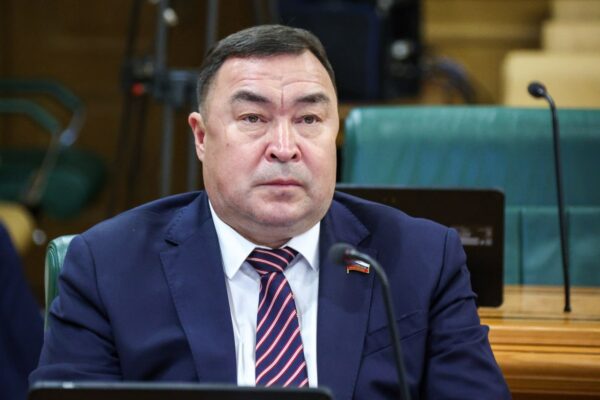
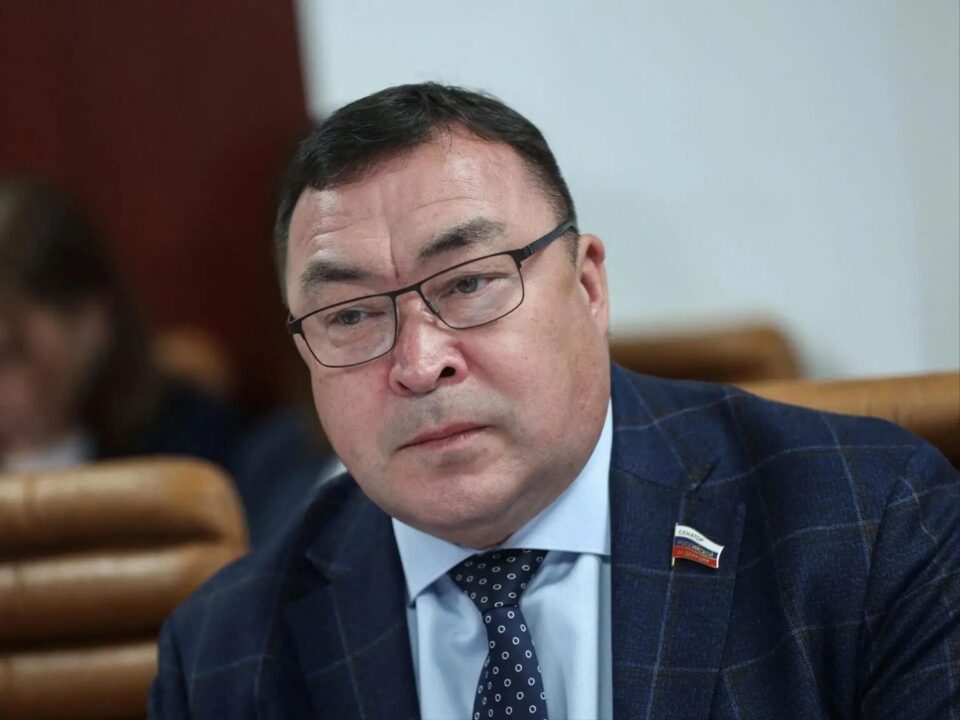
In a statement by RAIPON’s president, Aleksander Novyukhov — who is also a deputy in the State Duma of the Russian Federation — it is noted that the expulsion took place on Ukraine’s initiative and was driven by political motives that have nothing to do with the objectives of the and natural heritage: ‘This sets a dangerous precedent whereby legitimate indigenous peoples’ organisations are excluded from international cooperation on the basis of political expediency’.
RAIPON representatives note that, for example, Russia’s indigenous peoples have not been included in the international working group on indigenous languages due to opposition from Ukraine and the Baltic states. RAIPON representatives are seeking the UNESCO Director-General’s assessment of the situation that has arisen and are calling for indigenous peoples’ representative bodies to be able to participate in UNESCO’s activities “on an equal and non-discriminatory basis”.
Recent activities
In the view of independent indigenous peoples’ organisations, RAIPON’s statement raises questions, particularly in light of the organisation’s activities in recent years. Following the outbreak of full-scale war against Ukraine, RAIPON publicly supported the actions of the Russian authorities and has not once spoken out in defence of independent representatives of Russia’s indigenous peoples. On the contrary – the association’s leadership has essentially supported the Russian Federation’s state-led campaign to criminalise the independent indigenous peoples’ movement, echoing the Russian authorities’ claims that independent organisations of indigenous peoples represent extremism.
Independent representatives of indigenous peoples note that RAIPON is increasingly acting in line with Russian state policy and is failing to fulfil its role as an independent representative of indigenous peoples on the international stage. RAIPON demands the protection of its rights within international organisations, yet it has not itself used its status to defend the independent representatives of Russia’s indigenous peoples in situations where their organisations were banned, activists faced criminal prosecution, and movement leaders were placed in pre-trial detention. For example, the indigenous leaders Daria Egereva and Natalia Leonhart are currently being held in pre-trial detention, yet RAIPON has distanced itself from them.
- Ассоциация КМНСС и ДВ РФ лишилась статуса наблюдателя на сессии Комитета всемирного наследия ЮНЕСКО (22.07.2026 Indigenous Russia, in Russian)
- Ассоциация требует от ЮНЕСКО вернуть статус наблюдателя (05.08.2026 Indigenous Russian, in Russian)
- Открытое письмо Генеральному директору ЮНЕСКО (05.08.2026 raipon.info, in Russian)