With Putin’s permission, the Nenets remain an indigenous people
On 30 April 30 of this year, the Day of Indigenous Small Peoples was celebrated for the first time in the Russian Federation, in accordance with a 2025 decree by Russian President Vladimir Putin. On this day, 30 April 30 1999, the law “On Guarantees of the Rights of Indigenous Small-Numbered Peoples of the Russian Federation” was adopted.
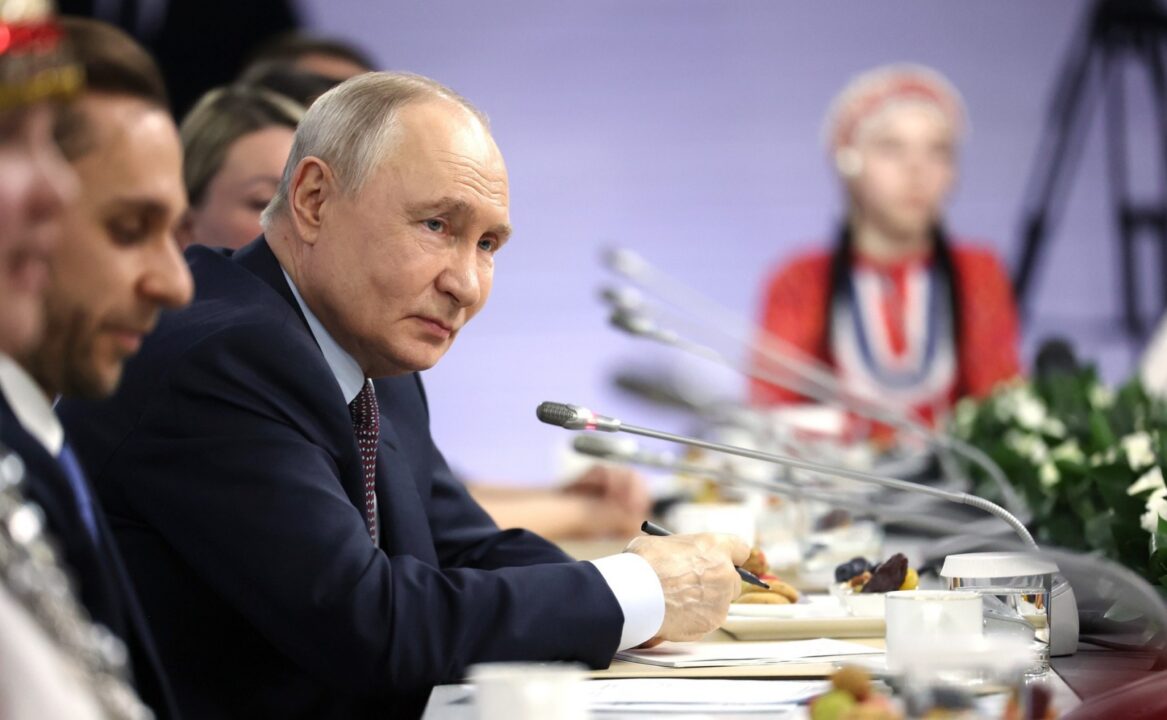
This year, Indigenous Peoples’ Day was celebrated primarily in the regions where these peoples live, such as the capitals of the Yamalo-Nenets and Khanty-Mansi Autonomous Okrugs. President Putin also hosted a reception for the indigenous peoples. Among those invited to the reception were many representatives of Finno-Ugric and Samoyedic peoples: Bessermans, Khanty, Nenets, Saami, Seto, and Veps.
Shortly before the meeting, the president visited an exhibition dedicated to the heroes of the Russo-Ukrainian War. In addition to officials, the president was accompanied by war veterans, the Nenets Rodion Puiko, and his Russian wife, Kristina Puiko, from Salekhard.
Putin’s viewpoint
Vladimir Putin emphasised that, together, large and small nations form a united family of Russian peoples; everyone must feel at home, for there is strength in the unity of the peoples, and this is how the country can feel secure and move forward. Putin noted that the country is home to 47 indigenous peoples, who are an inalienable part of all of Russia, adding that Russia was formed as a union of peoples and pointed with warmth to a married couple of war heroes, where the husband is from the Yamalo-Nenets Autonomous Okrug and the wife is from Krasnodar. Such mixed families are what unite the Russian people, the president noted.
Historical argumentation
He recalled the first 17th-century Russian explorers, Semyon Dezhnev and Yerofey Khabarov, whose expeditions led to the arrival of Russian settlers in the conquered territories. In Putin’s view, this did not disrupt or destroy the traditional way of life of the indigenous peoples, which, he asserted, did occur in some other countries where reservations were established. (However, Yerofey Khabarov has been viewed differently at various times, though his cruelty in the extermination of the local indigenous peoples along the Amur River is emphasised, resulting in these peoples acknowledging themselves as subjects of Russia. During the Soviet era, he became something of a hero. In the case of Semyon Dezhnov, his peaceful nature is emphasised, but it is nevertheless noted that he was the subjugator of the Yakuts and Yukagirs.)
According to Putin, the territories of indigenous peoples were incorporated into the Russian Empire not by overcoming resistance, but through cooperation with the indigenous peoples and respect for their traditions. The president went on to emphasise that Russia’s indigenous peoples began receiving an education as early as the beginning of the 19th century—that is, 100 years earlier than the indigenous peoples of North America. Putin noted that the Soviet era was also favorable for indigenous peoples. The first scholars from among indigenous peoples emerged from universities, and a written culture developed. Today, education in Russia is available in 76 languages, and the state supports indigenous peoples, Putin added.
Indigenous peoples and war
The president specifically emphasised that the reception included several participants in “special military operations” and thanked the representatives of indigenous peoples who are fighting for Russia in Ukraine, adding that this was also the case during the Great Patriotic War. Putin then handed the floor to representatives of indigenous peoples, all of whom praised the Russian president for his support. Most of the speakers were mothers of three who had been selected as advocates for the development of indigenous languages and cultures. Several of them are involved in organising humanitarian aid for the Russian army fighting in Ukraine, and the husbands or relatives of many of the speakers had been in the war.
Representatives of indigenous peoples
Nadezhda Sidorova, a representative of the Bessermans who spoke, is a widow. She spoke about her work in the village of Yunda in Udmurtia, where she leads a children’s folk ensemble.
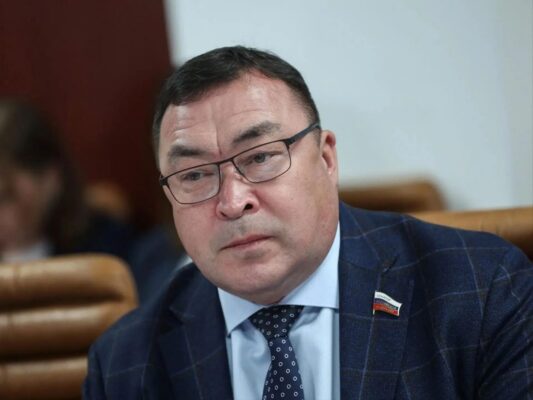
Dmitri Laptander, a representative of the Nenets, noted in his remarks that he had served in the military and had also delivered humanitarian aid to the front lines in Severodonetsk. He praised the local government in Yunda and noted that the Nenets population is growing rapidly. However, there is now a risk that the Nenets population will exceed 50,000, and since Russian Federation legislation defines an indigenous people as a group of fewer than 50,000, the Nenets may be removed from the list of indigenous peoples. Laptander asked whether the Nenets could retain their indigenous status even if their population exceeded 50,000.
In response, President Putin said: of course, whether 50, 60, or 100 thousand people, that’s not a large number. He confirmed that the state’s policy is aimed not only at preserving the ethnic group but also at ensuring that life continues even under harsh climatic conditions, and promised to resolve this issue. The president specifically felt it necessary to thank Laptander for raising the issue.
The floor was then given to Seto representative Yelena Variksoo, who thanked the president for the reconstructed Petseri Language Lyceum building and asked for continued project funding to preserve the national cultural heritage, such as Seto cuisine. She gave a detailed introduction to the national cuisine, and the President learned that, in addition to onion pies and pumpkin compote, Seto cuisine also includes mulgipuder (Mulgi porridge).
Following Yelena, the floor was given to Aleksei Krasilnikov, a soldier of Kamchadal descent (a mix of Itelmen and Russian), who serves as a diver in the Russian Pacific Fleet. He praised the military and said that living conditions are very good, thanks to Vladimir Putin.
Representing the Finno-Ugric peoples was 12-year-old Yanessa Kuznetsova, a member of the Khanty people, who spoke at length about how her great-grandmother, Sofia Kuznetsova, is a source of pride for her. Sofia went to the front in 1943 at the age of 17, where she served in the railway troops. Yanessa’s grandmother also joined the conversation; her two grandfathers, Pyotr Moldanov and Nikita Rusmilenko, fought in the war and were killed on the Leningrad front. The family cherishes their memory and always brings out their photos on 9 May, the grandmother said.
Yanessa’s dream was to perform for the president on the Khanty national instrument, the nars-yuh, and to participate in the 9 May parade on Red Square alongside her grandmother. She did get to play the nars-yuh for the president, but he did not respond regarding the parade. Putin expressed his gratitude to everyone who keeps the memory of the Great Patriotic War alive. Yanessa’s grandmother noted that many of her relatives and clan members, who are descendants of heroes of the Patriotic War, are taking part in a special military operation. Putin was delighted by this: “You see how closely these wars are connected; this is today’s reality.”
The floor was then given to a representative of the Ainu people, who spoke about life on Sakhalin Island; his words also gave the impression that things are constantly getting better.
Anastasiia Yevtushenko, a Veps language teacher at the Šoutjärv (Zheltozero) School, said that she has three daughters and that her family observes Veps traditions, eats Veps food, and does handicrafts. Her husband, however—as Karelian traditions dictate—is a hunter and fisherman. She introduced the village of Šoutjärv, which is home to a Veps ethnographic museum. The final speaker representing the Finno-Ugric peoples was Polina Kharybina, a reindeer herder, who praised the efforts to promote the Saami language and noted that modern information technologies support the Saami language. According to her, work is currently underway to create electronic supplements for a Saami language textbook, and educational games are also being developed. However, Kharybina expressed her gratitude, noting that this work can only be carried out with the support of local government and the state.
Russian narrative
The Russian president used the meeting to reaffirm the notion that Russia’s expansion occurred because the indigenous peoples desired it. His interpretation of history makes no mention of conquests or colonisation. At the same time, the entire history of the Russian state is a history of endless colonisation, as noted by Russian historian Vasily Klyuchevsky. In Russia, the issue of indigenous peoples is linked to “special military operations,” interpreted as meaning that even the smallest nations are defending Russia. No issues were raised at the meeting other than the topic of the Nenets’ indigenous status; no questions arose regarding education in the native language, natural and mineral resources, or the rights of indigenous peoples, and in the view of the indigenous peoples’ representatives who attended the meeting, everything seemed to be going well, for which they expressed their personal thanks to Putin.