“International” Finno-Ugric student forum in Mari El
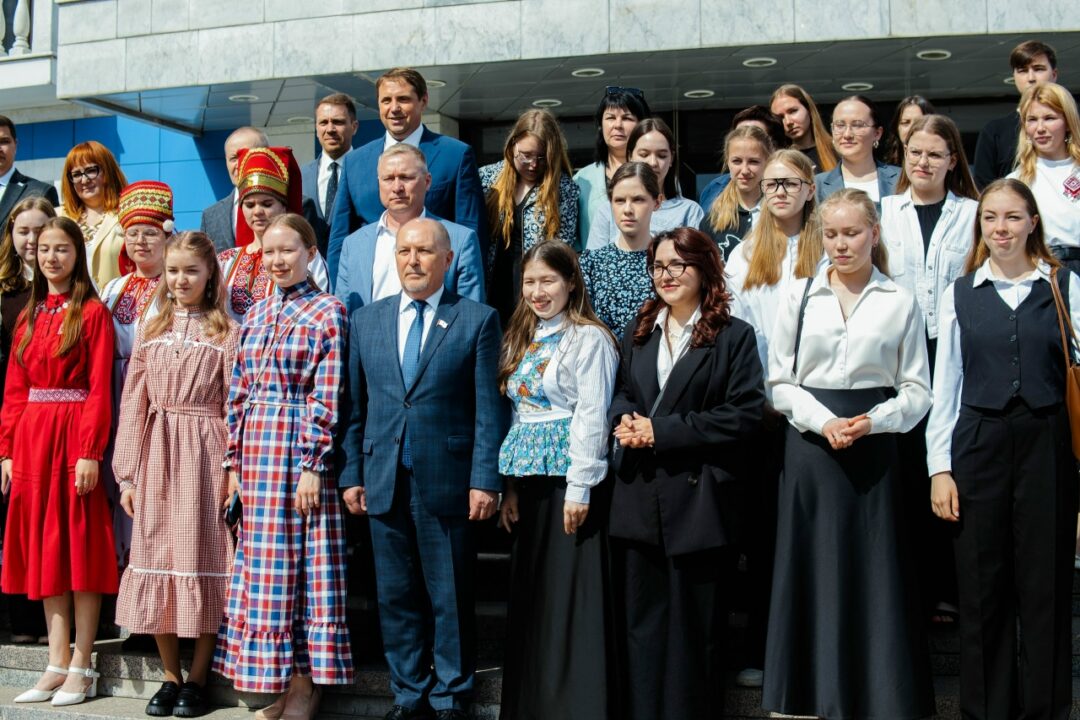
The 13th International Finno-Ugric Student Forum, titled “The Richness of the Finno-Ugric Peoples,” took place in Yoshkar-Ola from 14 to 18 May.
Why it was called an international forum remains unclear, as, to our knowledge, only students studying at universities in the Finno-Ugric republics of the Russian Federation were present. The forum was organised by the Association of Finno-Ugric Universities in Russia, Mari State University, and the Federal Agency for Ethnic Affairs of Russia. The event was dedicated to the 120th anniversary of Russian parliamentarism (the First State Duma convened in 1906) and the Year of National Unity proclaimed by the President of Russia.
Beginning of forum
The forum, whose opening session took place in the hall of the State Council of the Republic of Mari El, brought together about a hundred students from the Republics of Karelia, Komi, Mari, Mordovia, and Udmurtia; students from the Khanty-Mansi, Yamalo-Nenets, and Nenets Autonomous Okrugs did not attend—reportedly because Ukrainian drones had disrupted their journey. It is interesting to note that almost all of the students who attended were female; there were only a few male students.
The event began with the Russian national anthem, and a presidium was elected: all the high-ranking state officials in attendance, as well as members of the university administration. Not a single student was selected for the presidium.
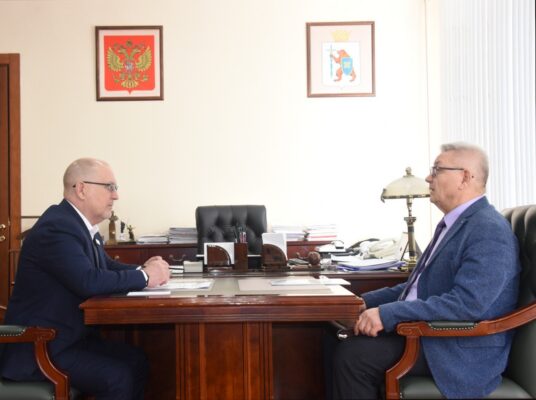
The proceedings continued as is customary at such forums: all the leaders of the Republic of Mari El, as well as the university rector, greeted the assembled students. Igor Barinov, Chairman of the Federal Agency for Ethnic Affairs, had also sent his greetings, as had Pyotr Tultayev, Chairman of the Association of Finno-Ugric Peoples of Russia and Senator of the Russian Federation Council. In a dozen or so greetings, the emphasis was on the responsibility of young people to preserve the cultural heritage of their ancestors, as well as on the fact that Finno-Ugric youth must fight against neo-Nazism and fascism and be patriots of their homeland.
Schedule of forum
Once the opening remarks were delivered, some of the leaders left immediately. This was followed by student presentations on topics including the use of artificial intelligence in language and cultural studies, volunteer efforts to preserve languages in the digital environment, as well as how ethnocultural diversity is protected by the constitution and how institutions can engage young people to preserve national heritage. The content of the presentations was largely overview-oriented, focusing on sharing experiences and best practices; there were no presentations in the plenary session that were socially critical or addressed the situation of ethnic groups.
Among other topics, the conference featured sessions on: preserving historical memory and combating the falsification of history; heroism in the fight against neo-Nazism and Nazism; the unity of ethnic groups as a strength of Russia; the youth parliament in improving regional legislation; archaeology and history; Finno-Ugric studies and comparative linguistics; Finno-Ugric literary studies; stylistics of Finno-Ugric peoples’ fiction; ethnography, folklore, and traditions; arts and crafts; museology and cultural tourism; ethnic sports and health; professional culture of Finno-Ugric peoples; modern educational technologies; student self-government; Finno-Ugric youth initiatives, patriotic, volunteer, and other projects; intercultural communication. As can be seen, the fight against Nazism, nationalism, and the falsification of history has become a top priority for Finno-Ugric students.
Cultural programme
In their assessment of the plenary session presentations, the Finno-Ugric students praised the government and expressed a positive outlook, which also pleased the government representatives in attendance, who in turn praised the cultural richness.
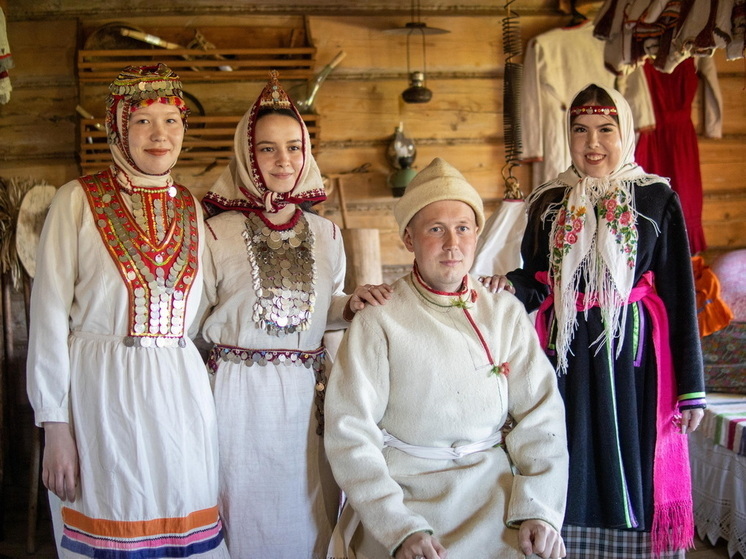
A great deal of attention was indeed devoted to the cultural programme. An excursion titled “Evening in Yoshkar-Ola” was organised, and a trip was taken outside the city to the village of Uncho (formerly Shorunzha), which was the Finno-Ugric Capital of Culture in 2019. Concerts were also held, and an exhibition featuring students’ creative work was opened.
Background
The All-Russian Finno-Ugric Student Forum, to which the word “international” has been added, serves as a sort of alternative to IFUSCO—the International Finno-Ugric Student Conference—which have been held in a new location each time since 1984. The most recent, the 41st IFUSCO conference, took place this past May in Helsinki. The first All-Russian Finno-Ugric Student Forum was held in 2013 in Syktyvkar, and students from other countries did indeed participate. In recent years, Finno-Ugric student forums have been held in Yoshkar-Ola, the capital of Mari El.
- В Марий Эл представили «Богатство финно-угорских народов» (15.05.2026 Mari El, in Russian)
- В Марий Эл завершился студенческий форум финно-угорского мира (18.05.2026 Mk.ru, in Russian)
- В Марий Эл прошел XIII Международный финно-угорский студенческий форум «Богатство финно-угорских народов» (18.05.2026 ProGorod, in Russian)