Capitals of Culture
The title that has travelled the Finno-Ugric world since 2013.
Finno-Ugric Capitals of Culture is a flagship initiative of the Youth Association of Finno-Ugric Peoples (MAFUN) and URALIC Centre for Indigenous Peoples NGO which was established in 2013. Fenno-Ugria has been a cooperation partner of the Finno-Ugric Capitals of Culture programme since its inception.
The programme of Finno-Ugric Capitals of Culture aims to raise awareness of Finno-Ugric and Samoyedic peoples as well as Uralic languages, to strengthen collective Finno-Ugric identity and to stimulate sustainable local development in different corners of the Finno-Ugric world.
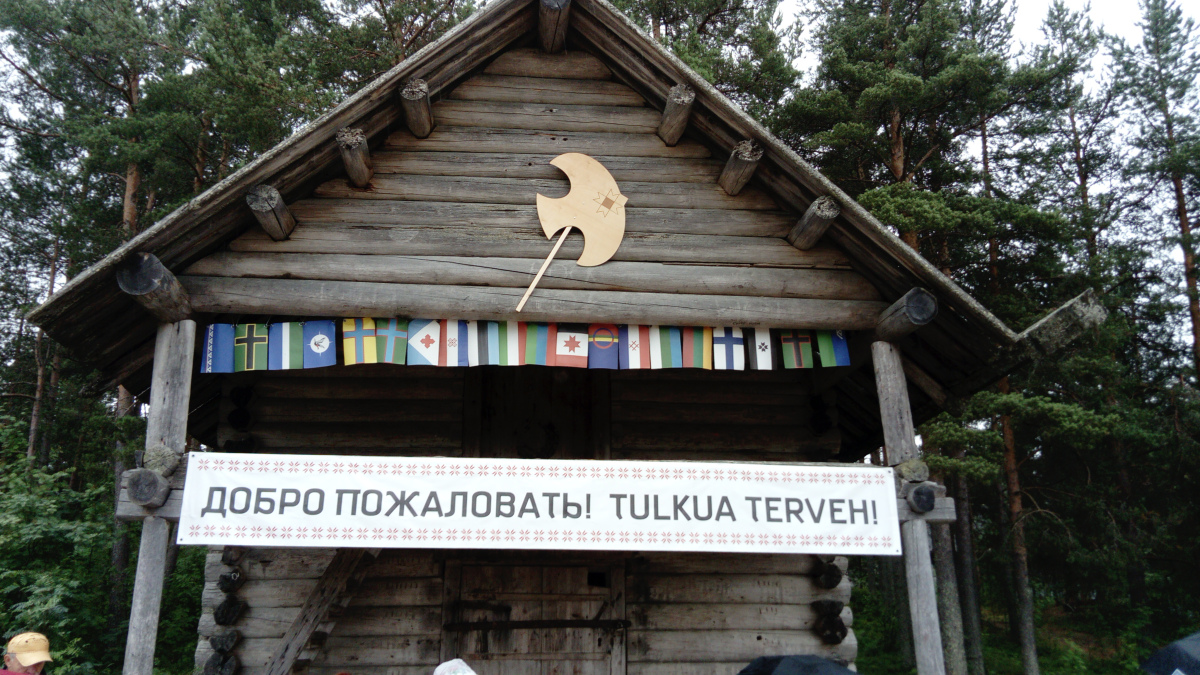
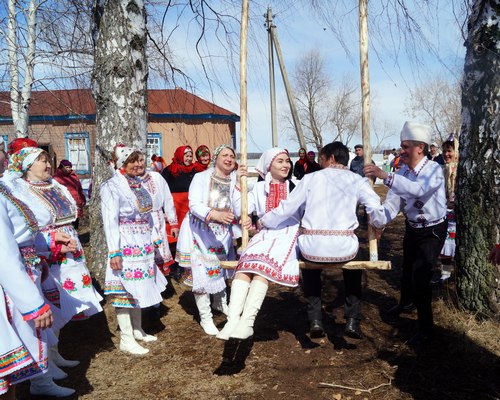
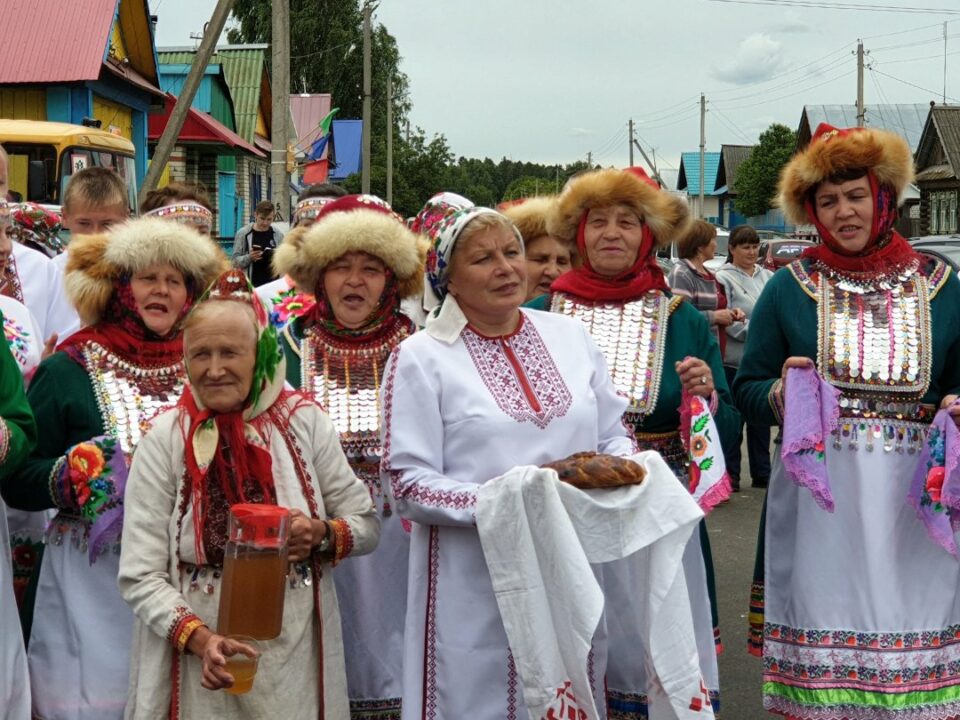
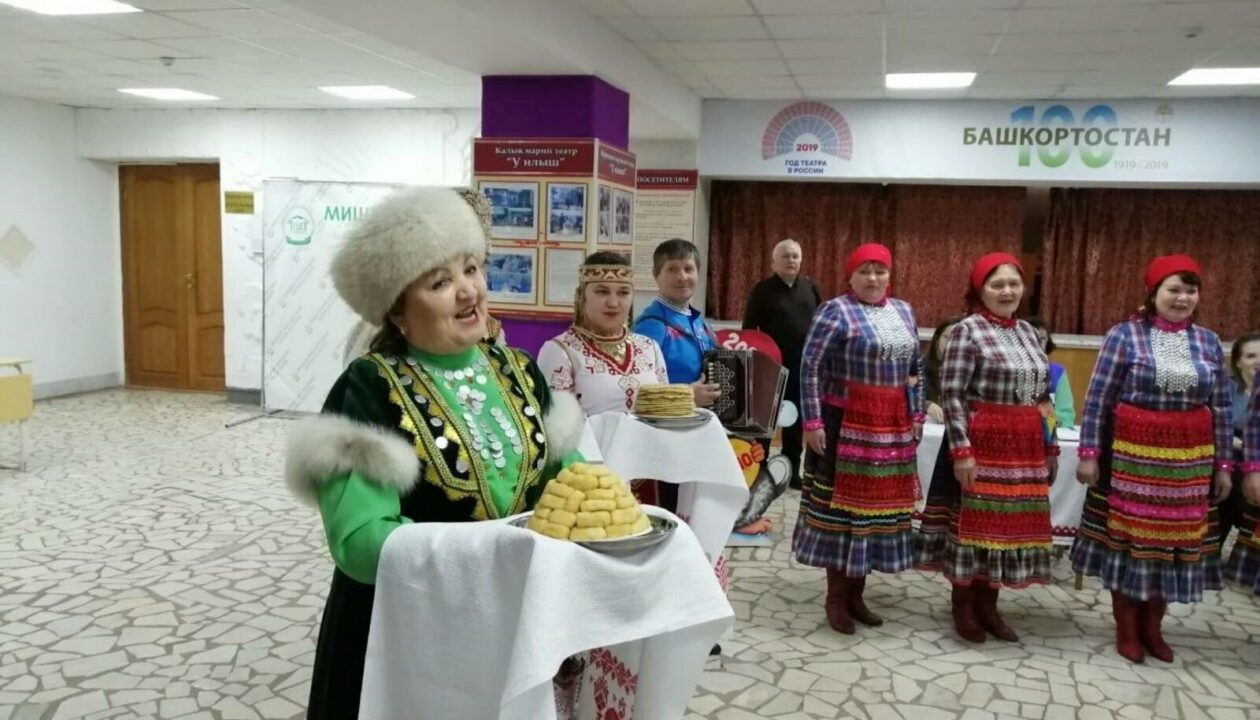
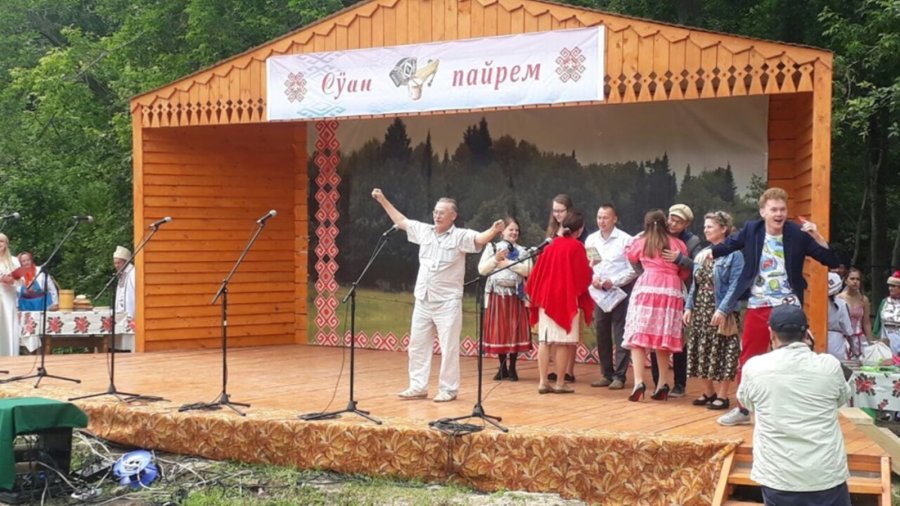
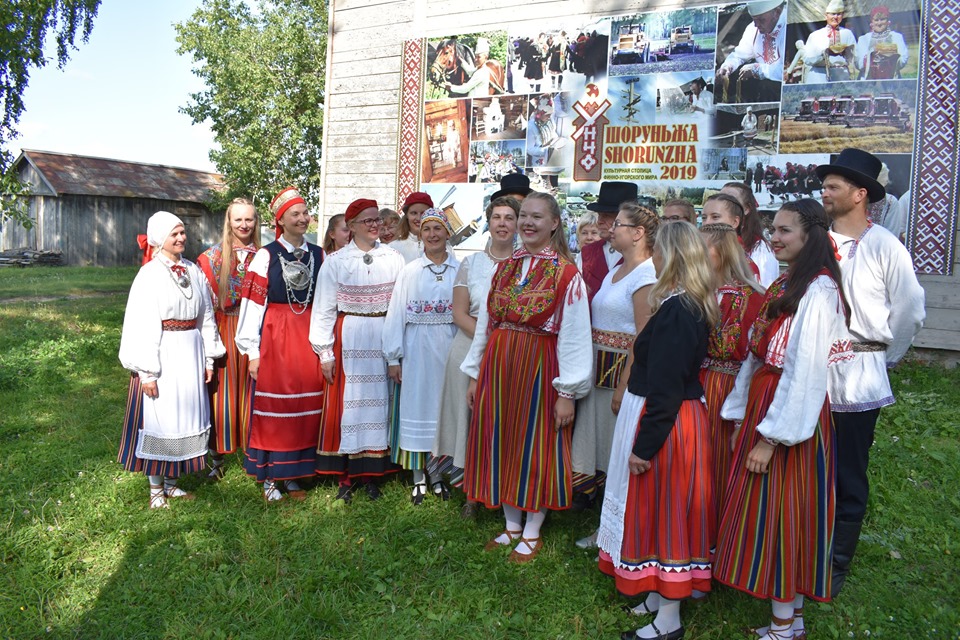
To date, the title of Finno-Ugric Capital of Culture has been awarded to twelve villages or cities: Udmurt village Bygy (2014), Seto village Obinitsa (2015), Hungarian village Iszkaszentgyörgy and City of Veszprém (2016), Karelian village Vuokkiniemi (2017), Mari village Shorunzha (2019), Mari-speaking village Mishkan in Bashkortostan (2020), Abja-Paluoja in Mulgimaa region of Estonia (2021), Baiterek in Bashkortostan (2022), Kuhmo in North Finland (2023), Narva (2025) and Hancock (2026).
In all cases, the title of Finno-Ugric Capital of Culture has helped raise the profile of the title-holder both domestically and internationally, including via cultural tourism.
Perhaps even more importantly, being a Finno-Ugric Capital of Culture has strengthened local communities and provided them with new opportunities for development. The programme has been warmly received both in the Finno-Ugric world and beyond, and has been described as a good example of the promotion of indigenous peoples’ cultural rights by Ms. Victoria Tauli-Corpuz, the UN Special Rapporteur on the Rights of Indigenous Peoples.
Tsirk
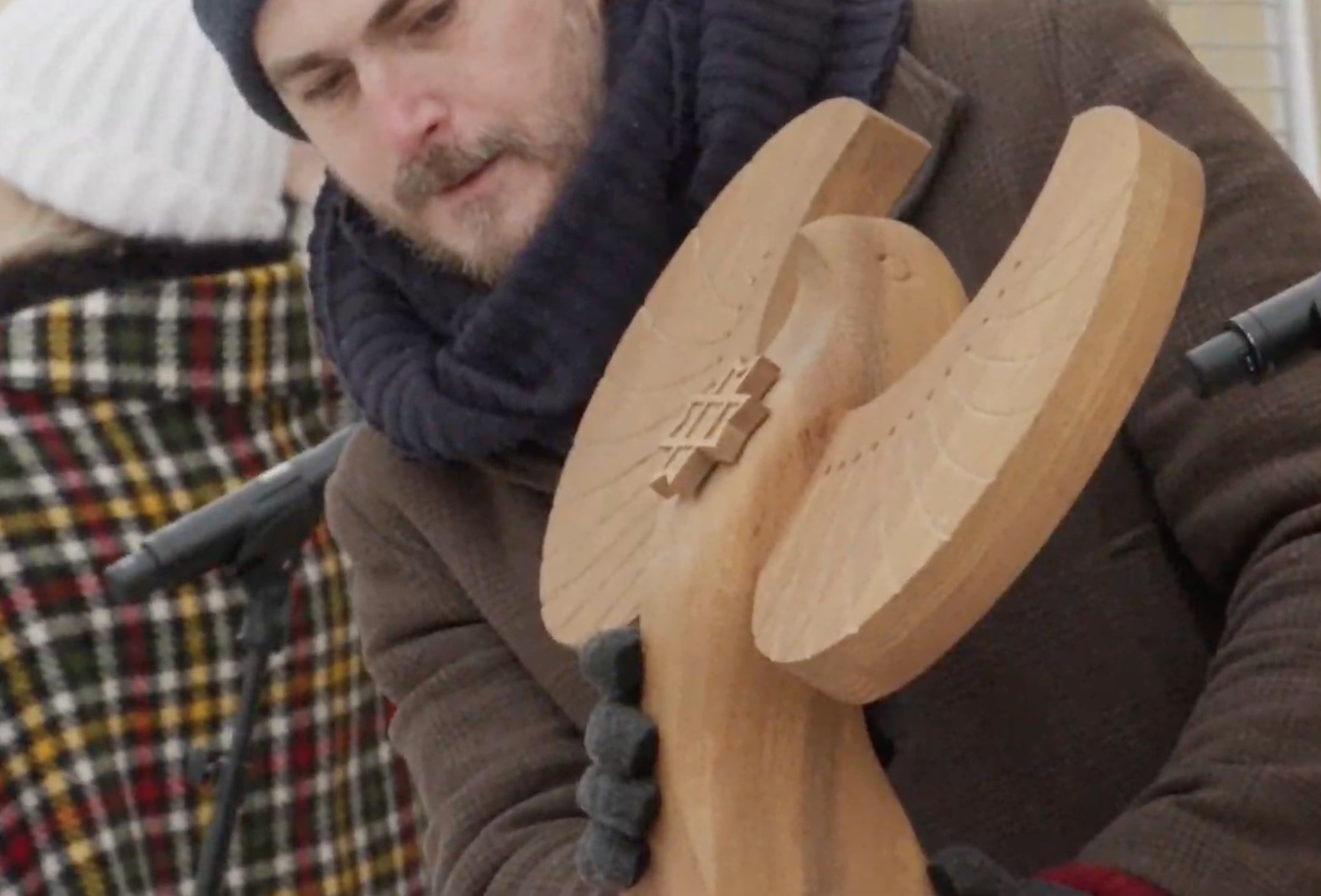
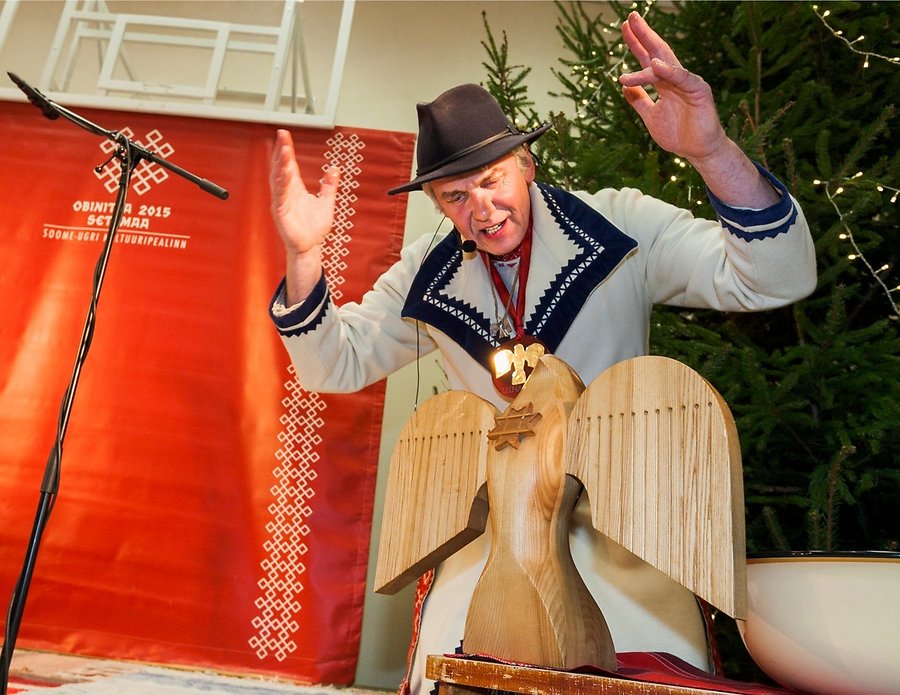
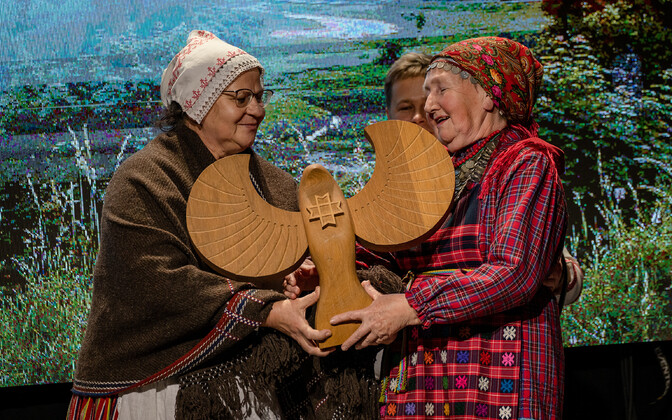
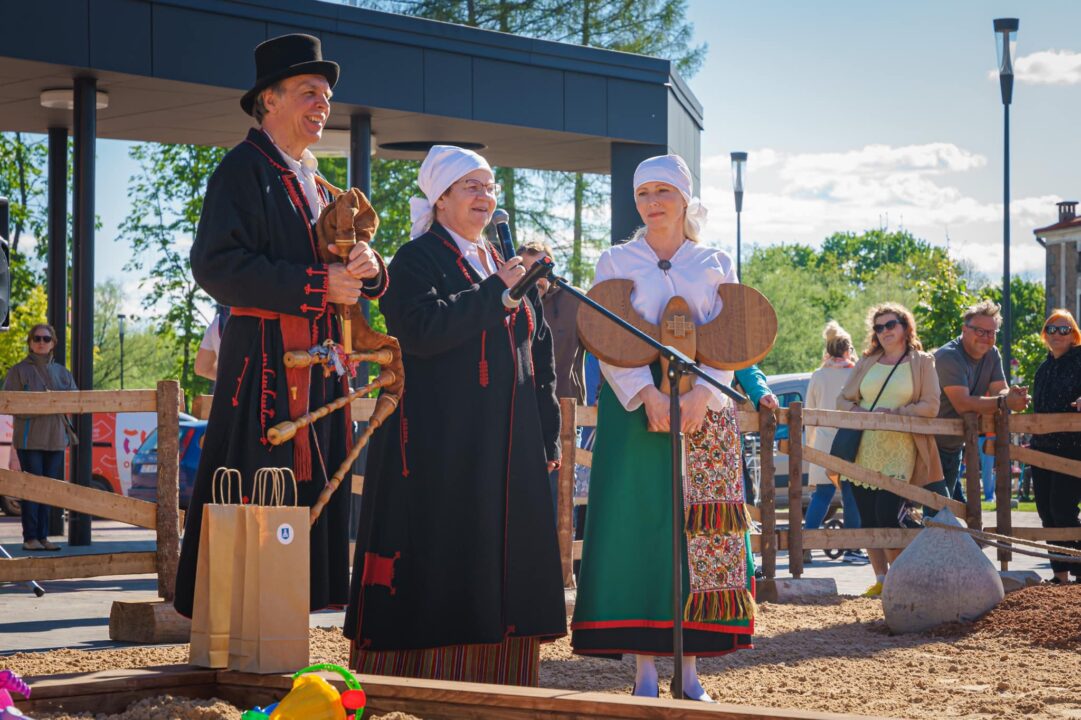
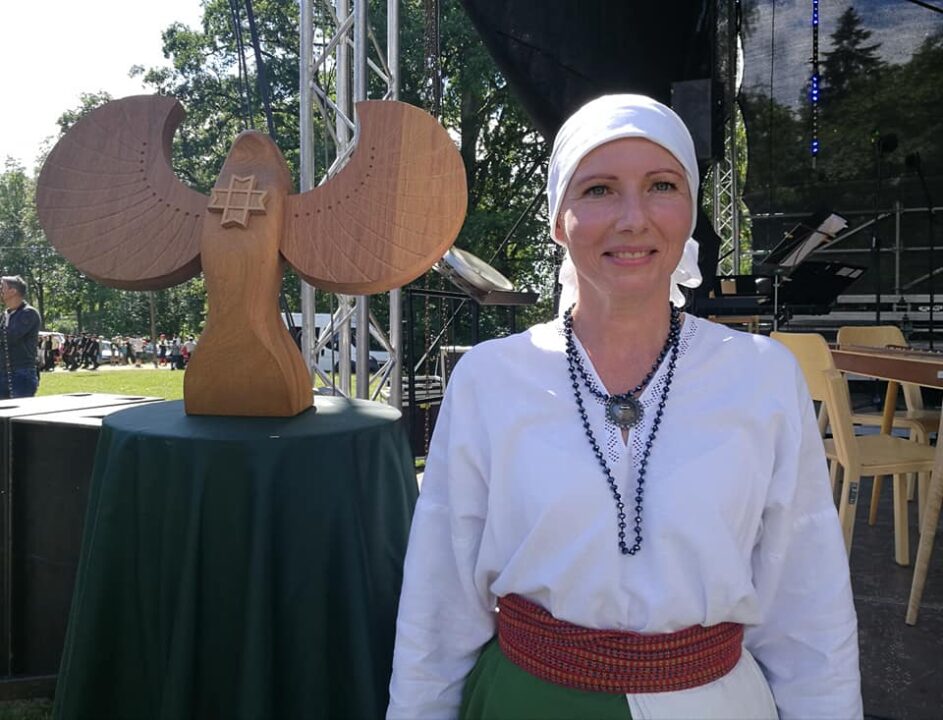
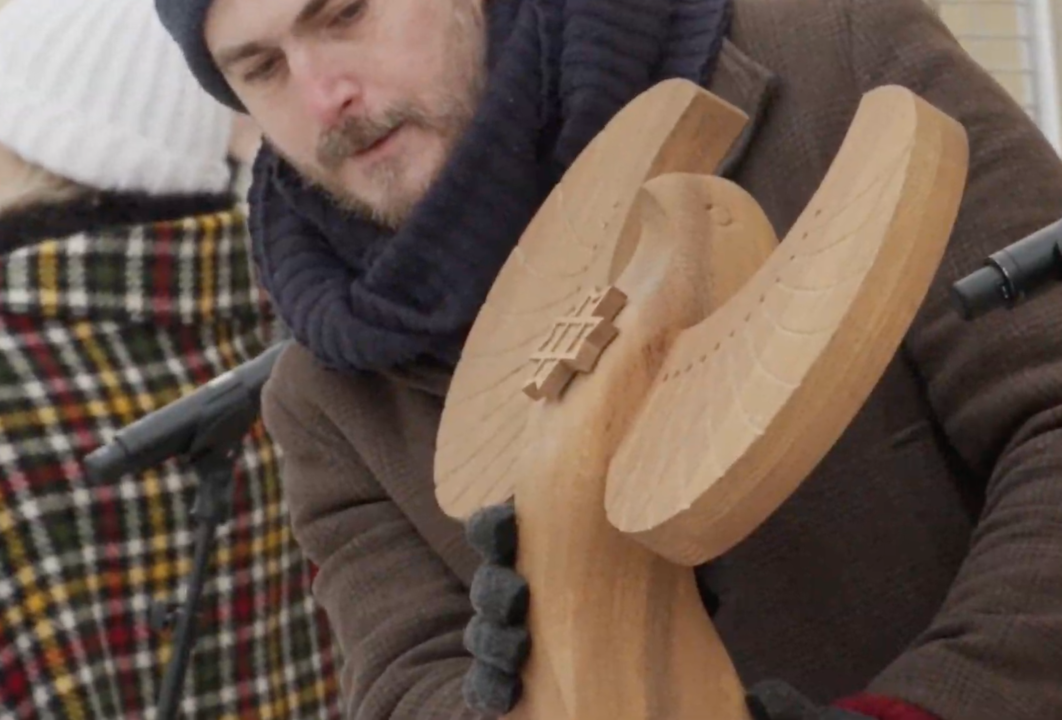
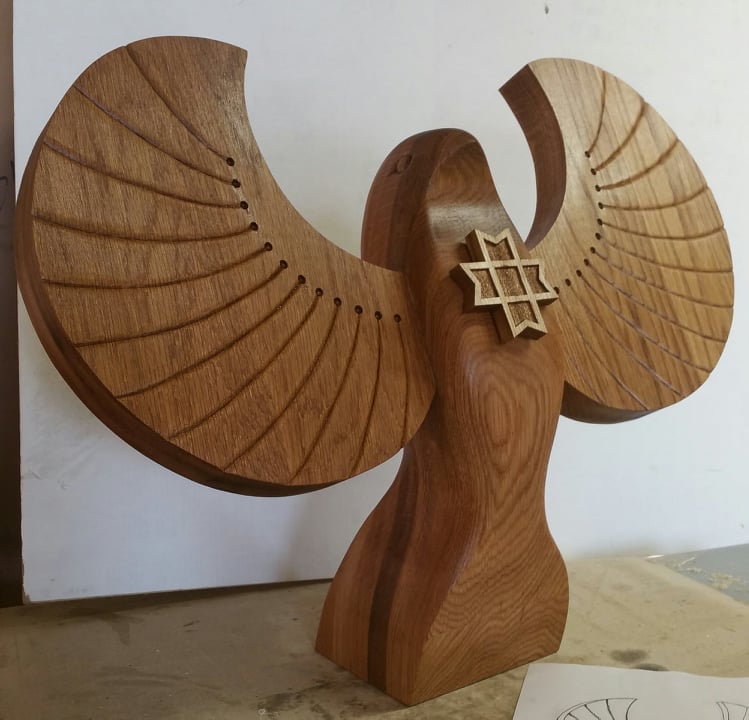
The World Bird, or Tsirk, known from the mythology of the Finno-Ugric peoples, is the symbol of the Finno-Ugric Capital of Culture. Tsirk has 26 feathers on its wings – 13 on each wing, each symbolising one of the Finno-Ugric peoples.
Folk tradition
According to Finnic folklore, the world was born from a bird’s egg. This is recounted in Estonian, Ingrian, and Karelian runo songs about the creation of the world, which probably originated from a common mythological basis. Folklorists Matti Kuusi and Ingrid Rüütel have proposed a possible origin for these songs. According to this, at first there was only the sky and the endless primordial ocean, above which the Sky Bird (usually a duck) sought a place to nest. Finding a solitary mound, it laid three eggs on it. A gust of wind blows the eggs into the sea, and they become the sky, the earth, the sun, the moon and the stars.
First and second
There are two statues of Tsirk, distinguished by the position of their wings. Both wooden statues of Tsirk of the Finno-Ugric Capitals of Culture were made by Peipsimaa master Pavel Varunin. The wings of the first statue point downwards. It was completed in 2013 and was given to the first Finno-Ugric Capital of Culture, the Udmurt village of Bygy. The handover ceremony took place at the MAFUN conference in Helsinki. According to an agreement between Bygy and the URALIC Centre, the permanent home of the first bird since 2018 has been Bygy.
The second Tsirk, made by master craftsman Varunin, marks the launch of the Finno-Ugric Capitals of Culture programme. The new Tsirk spreads its wings upward, expressing hope for the future of the Capitals of Culture and the Finno-Ugric movement.

Further information:
Oliver Loode
Programme Manager
Finno-Ugric Capitals of Culture
Oliver.Loode@uralic.org
+372 513 2992
www.uralic.org
Related news
Competition for Finno-Ugric Capital of Culture 2027 begins
URALIC Centre (Estonia), in cooperation with Sukukansojen ystävät ry (Finland) announced the start of the competition for the title of Finno-Ugric Capital of Culture 2027. The special theme of the year 2027 will be 'Sustainable Finno-Ugric Tourism'. The winner of the competition will be announced on 20 June 2026 in Hancock (Michigan, USA).
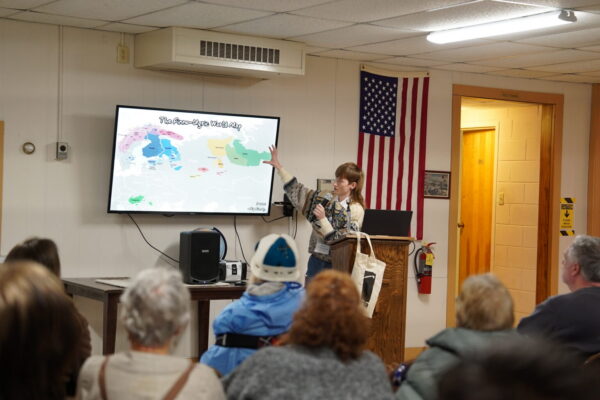
Hancock 2026 opening ceremony: aftermath
The year of the 2026 Finno-Ugric Capital of Culture was opened in Hancock, Michigan on 24 January 2026.

Opening ceremony of Hancock 2026
The 2026 Finno-Ugric Capital of Culture year was opened in Hancock, Michigan on 24 January at Heikinpäivä celebrations.