Issue 18 of “Alkukoti” published
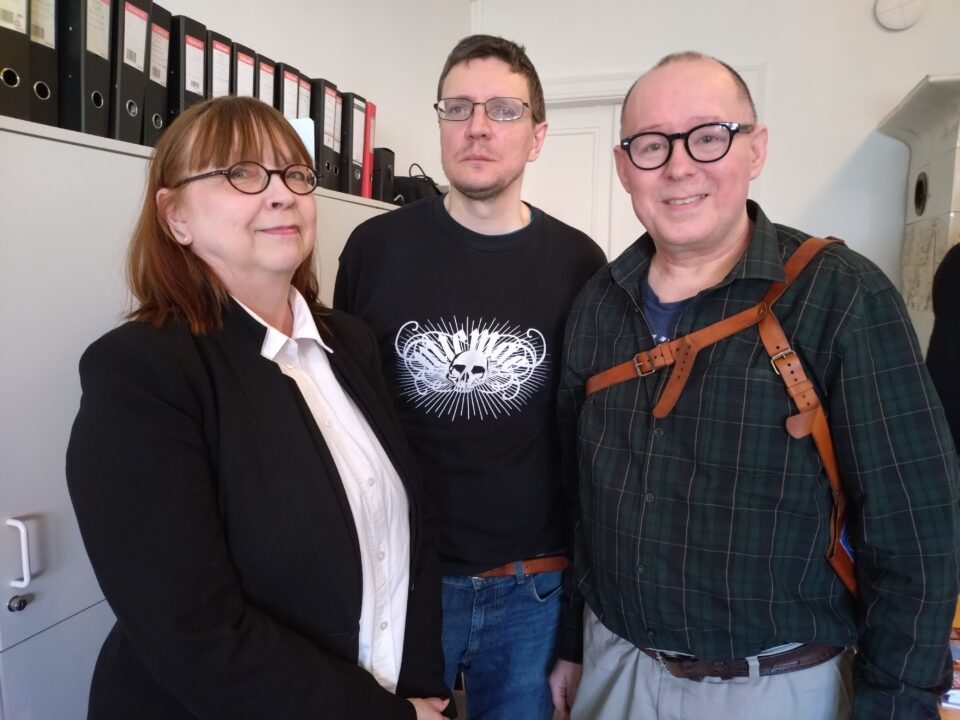
On 12 April, the 18th issue of Alkukoti (“Homeland”), a Finnish-language magazine introducing Finno-Ugric peoples, their languages, and cultures, was presented at the M.A. Castrén Society’s premises in Helsinki.
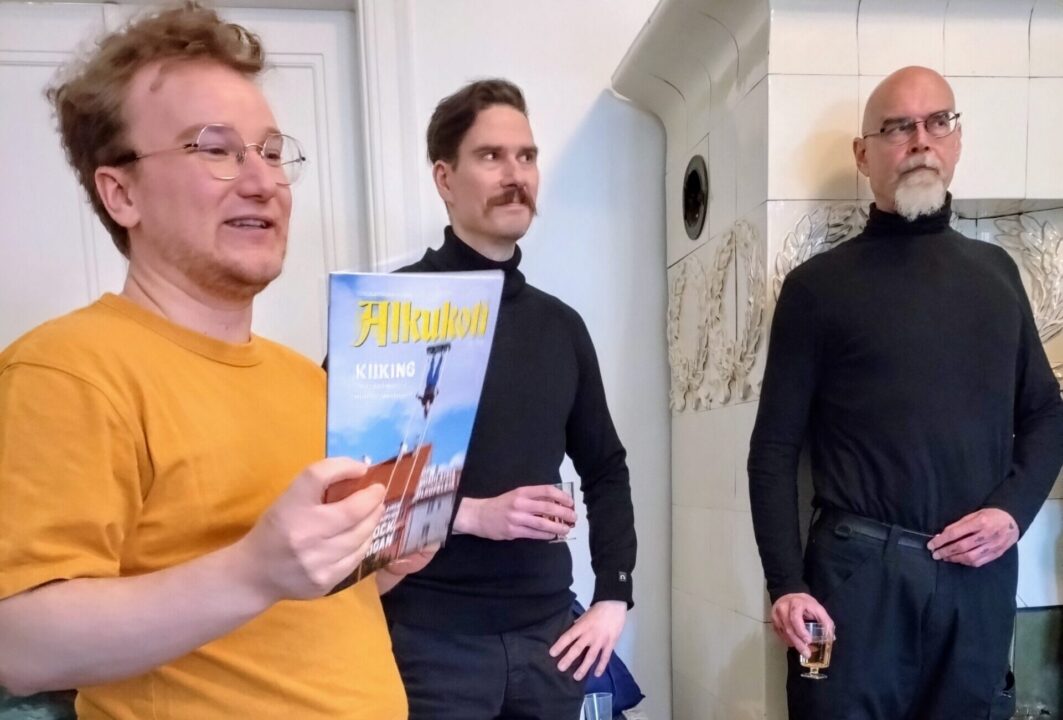
This latest issue is longer than usual (90 pages). Originally published by the Finno-Ugric Committee of the University of Helsinki Student Union from 2000 onwards, the magazine has been published by Sukukansojen ystävät ry (the Association of Friends of Finno-Ugric Peoples) since 2023. The editorship of the magazine rotates and is determined through a competition each year. The editor-in-chief of this issue is Felix Mäkelä, and the main themes are sports, physical activity, competitions, and traditional games.
Chairman’s introduction
In the introductory text to the magazine, Aleksi Palokangas, head of Sukukansojen ystävät ry, writes that the Finno-Ugric movement touches on all areas of life. One of the most important areas for fostering a sense of national identity is sports. Aleksi lists a whole host of athletes, including Finns, Estonians, Komi, and Udmurts, who, due to circumstances, have had to represent other countries. For example, the Komi Raissa Smetanina and the Udmurt Tamara Tikhonova are both known as Russian cross-country skiers. Hancock, the 2026 Finno-Ugric Capital of Culture in the United States, is the hometown of Finnish-American ice hockey player and Olympic champion Rodney Paavola (1939–1995). Sports is a field that can make both a people and a country famous around the world. For example, Paavo Nurmi literally put Finland on the world map.
A longer article on the Finno-Ugric capital of Hancock and Finns living in the US is also by Aleksi Palokangas. As of 2019, there were 653,222 Finns in the United States.
Finno-Ugric sports
The magazine features an in-depth introduction to kyykkä, a game of skittles originating in Karelia: its history, development, and rules. The game has evolved into a serious competition, and for both Karelians and Finns, it is a national sport with a large following. Competitions are even covered in the media.
Kamilla Kaiser introduces a unique and interesting soccer competition called Ben-Bon in the magazine. This is an Udmurt competition in which the Ben team consists of Northern Udmurts and the Bon team of Southern Udmurts. Competitors must be fluent in their dialect. The tradition began in 2008, and the first competition was held in Izhkar (Izhevsk). The teams consisted of Udmurt intellectuals, journalists, musicians, writers, and politicians. By now, there is even a trophy, and both Ben and Bon have each secured five victories.
A comprehensive article explores swing games throughout history. It provides a detailed overview of kiiking, which has gained immense popularity among Estonians. Estonians hold the world records for kiiking. A somewhat shorter article introduces the traditional games of the Komi and Udmurt peoples: daroviki, skomo, and chimal.
Other topics
The journal also features articles on traditional topics, such as Elvi Usmanova’s in-depth piece on the national cuisine of the Ingrian Finns, which includes several recipes. The Nenets people are profiled in greater detail.
Regarding Finno-Ugric events, the magazine highlights the 24th International Congress of Finno-Ugric Studies (CIFU), held in Tartu in 2025. The excursion to Setomaa that took place during the congress is covered in greater detail. Also included under this section is a travelogue written by Emma-Lotta Kiuru, who hiked in Koli National Park in North Karelia. She is captivated by Koli’s breathtaking views, as well as the region’s numerous ancient sacred sites associated with nature.
A very interesting and thorough article is by Atte Huhtala, who writes about the Ingrian king Leander Reijo (1904–1932) and the Livonian king Uļi Kīnkamägi (1869–1932). Although both were uncrowned kings, they were remarkable figures and prominent representatives of their peoples, who tragically died in the summer of 1932.
The magazine also focuses on the Karelian language, specifically the Aunus Karelian dialect. Niko Tynnyrinen, a Karelian language teacher, translator, and researcher living in Joensuu, writes in this dialect. The article introduces Leena Lehtolainen’s book The First Murder, which has been translated into Aunus Karelian by Maria Kuismin. The author focuses primarily on the quality of the translation.
There is also a piece on the famous Russian poet Igor Severyanin (1887–1941), who lived in Estonia. The magazine also features a tribute by Riho Grünthal, a professor at the University of Helsinki, to the talented and versatile Mari director and public figure Vassili Pekteyev (1954–2025), as well as much more.
Issues of Alkukoti
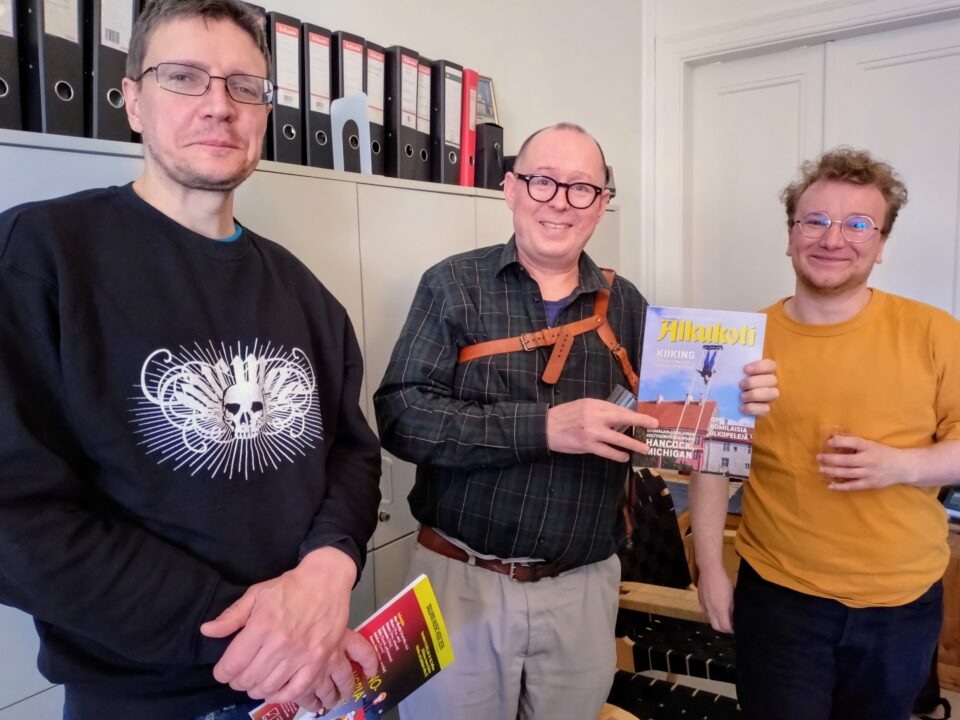
New and back issues of the magazine can be viewed, for example, at the Fenno-Ugria Library and on the Sukukansojen ystävät ry website. You can also subscribe to the magazine, and by joining Sukukansojen ystävät ry. You can receive the magazine at home for an annual membership fee of 15 EUR. see more information here (in Finnish).
FURTHER INFORMATION: