Brussels: presentation of Fenno-Ugria’s report and opening of Piret Räni’s exhibition
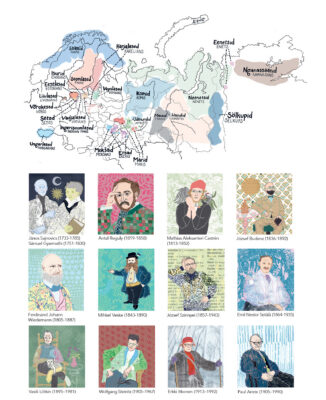
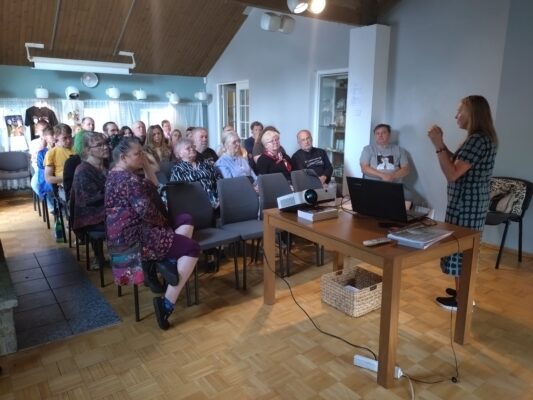
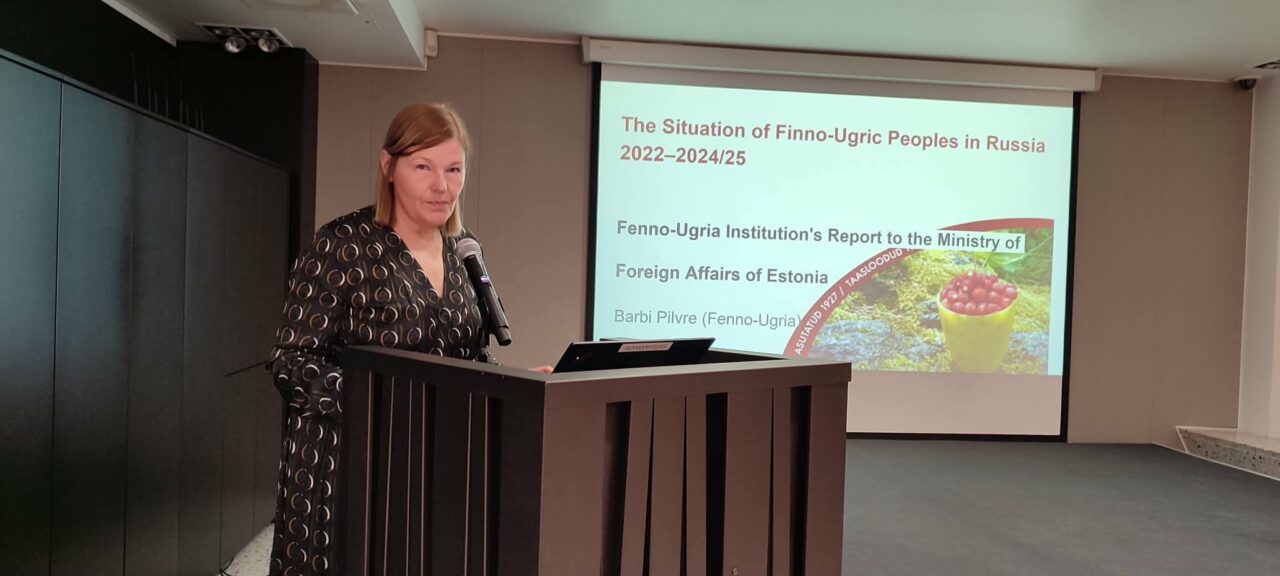
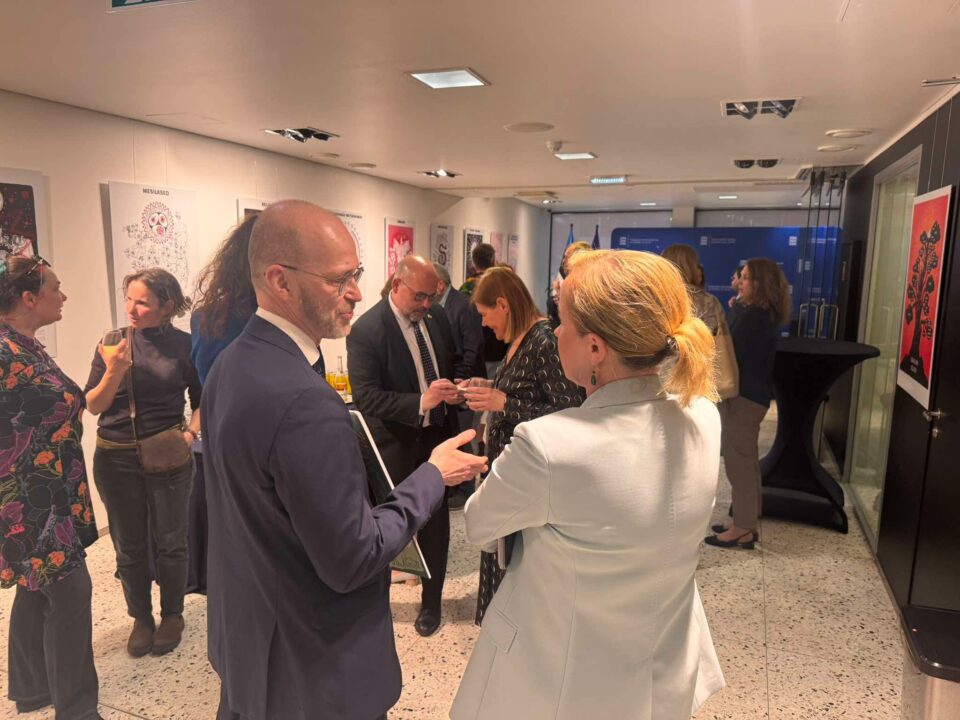
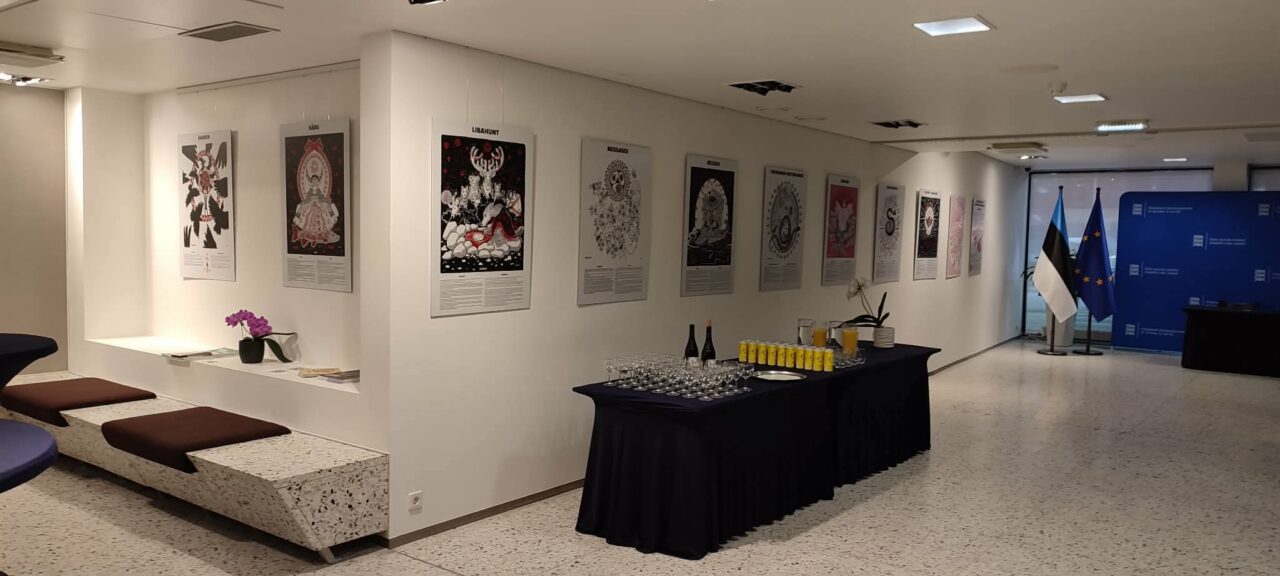
On 21 May, the opening of Piret Räni’s exhibition “Animals in the Mythology of Finno-Ugric Peoples” took place at the Estonian Embassy in Brussels. At the same time, Barbi Pilvre, director of Fenno-Ugria, gave a half-hour overview of the situation of Finno-Ugric peoples in Russia in recent years, based on a report commissioned by the Ministry of Foreign Affairs.
The topic was new to most of those present: Russia’s minority peoples are rarely discussed in today’s geopolitical context.
The discussion centered on the fact that, as is well known, there are 1.7 million representatives of Finno-Ugric ethnic groups in Russia, of whom 1 million consider their native language to be their mother tongue. The Finno-Ugric peoples are scattered, and Russian-speaking populations dominate within the borders of their autonomous regions. Since 2018, language learning has been voluntary, which has led to a decline in native language proficiency. Assimilation is accelerated by the exclusion of native languages from education and society, as well as by Russification policies. Finno-Ugric organisations are under Russian state control, and ethnic events and celebrations are subject to the ideology of Russian unity and military themes. In recent years, external contacts have been curtailed, and the focus has been on strengthening central authority.
Just as cultural exchanges with Russia have been severed on the Estonian side, Russia has also declared Finno-Ugric international cooperation to be politicised and has obstructed it.
The overview was based on the understanding that, in terms of Estonian foreign policy, Russia is currently a country engaged in a war of aggression against Ukraine, with which Estonia, as a member of the EU and NATO, has no relations, and that Russia encompasses all Russian nationalities, including the Finno-Ugric peoples.
At the same time, Estonia has a long-standing tradition of interaction, cooperation, and assistance with Finno-Ugric peoples, a tradition founded by, among others, President Lennart Meri, continued by Arnold Rüütel, Toomas Hendrik Ilves, and Kersti Kaljulaid, and in which the current president, Alar Karis, maintains a continuing interest.
The topic of Russia’s regions is related to security and is informative even beyond the scope of the Finno-Ugric world. The report shows that Estonia’s interest in Finno-Ugric peoples has not waned and lays the groundwork for communication and cultural cooperation to continue in the future, once the war against Ukraine has ended and the situation has (hopefully) normalised.
The event was opened by Estonian Ambassador Helen Kaljuläte. In attendance was Finnish Ambassador Jouko Leinonen. Incidentally, he is a representative of the Tornedalian ethnic group, hails from the border region between Finland and Sweden, and also speaks Meänkieli. In addition to Finland, diplomats from various countries participated.
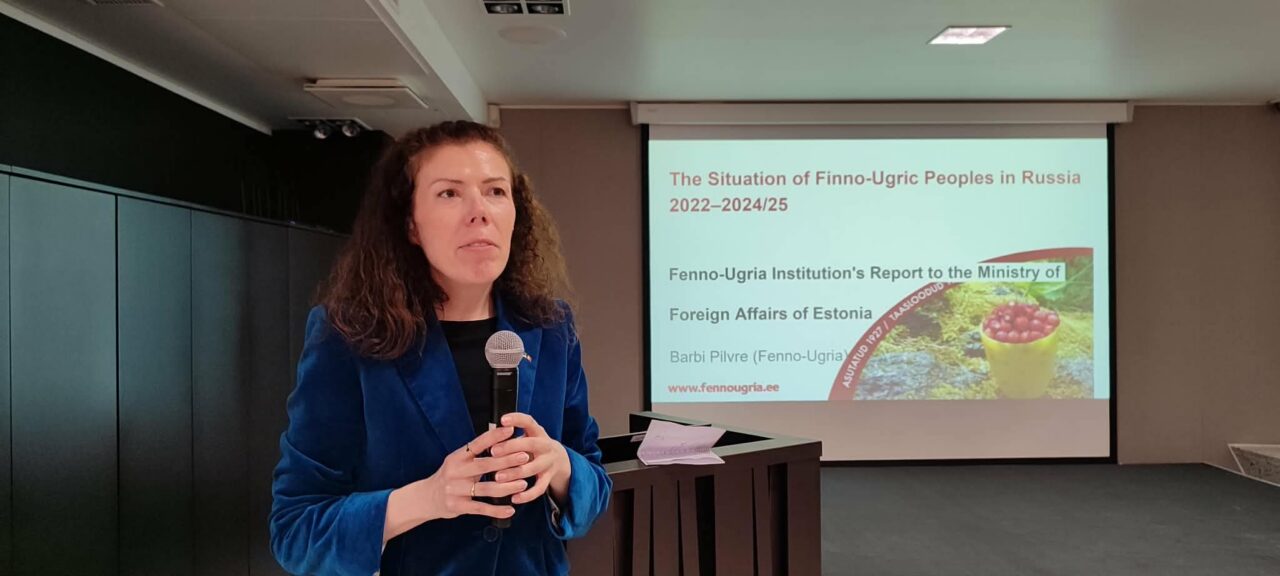
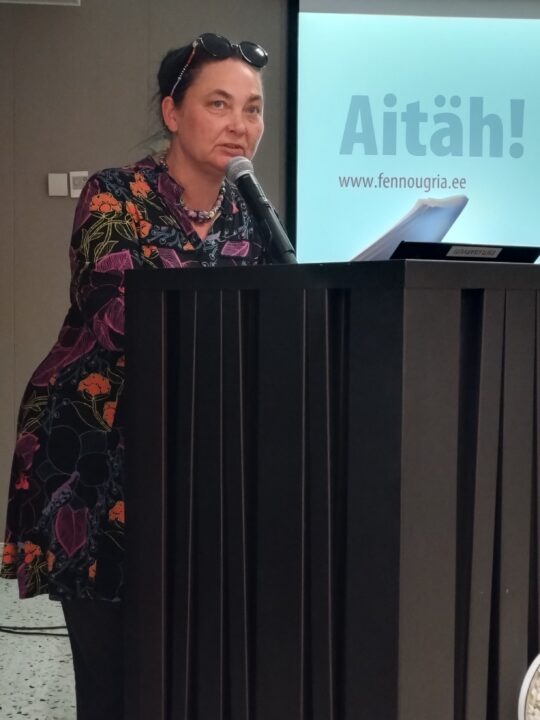
We would like to thank Ambassador Helen Kaljuläte and Heili Jõe, the event’s organiser from the embassy! On behalf of Fenno-Ugria, Project Manager Janno Zõbin contributed to the event. The Ministry of Culture funded the exhibition’s travel to Brussels.
Piret Räni’s exhibition came about through Fenno-Ugria’s initiative when the organisation commissioned a 2025 Finno-Ugric calendar with an animal theme, which proved to be very popular. The artist collected creation myths from Finno-Ugric cultures and incorporated other traditions dating back to the era of a shamanistic worldview. She has sought to uncover the oldest and most unifying threads of Finno-Ugric cultures. Piret Räni’s exhibition will remain open in Brussels until fall and is accessible to visitors at the embassy.
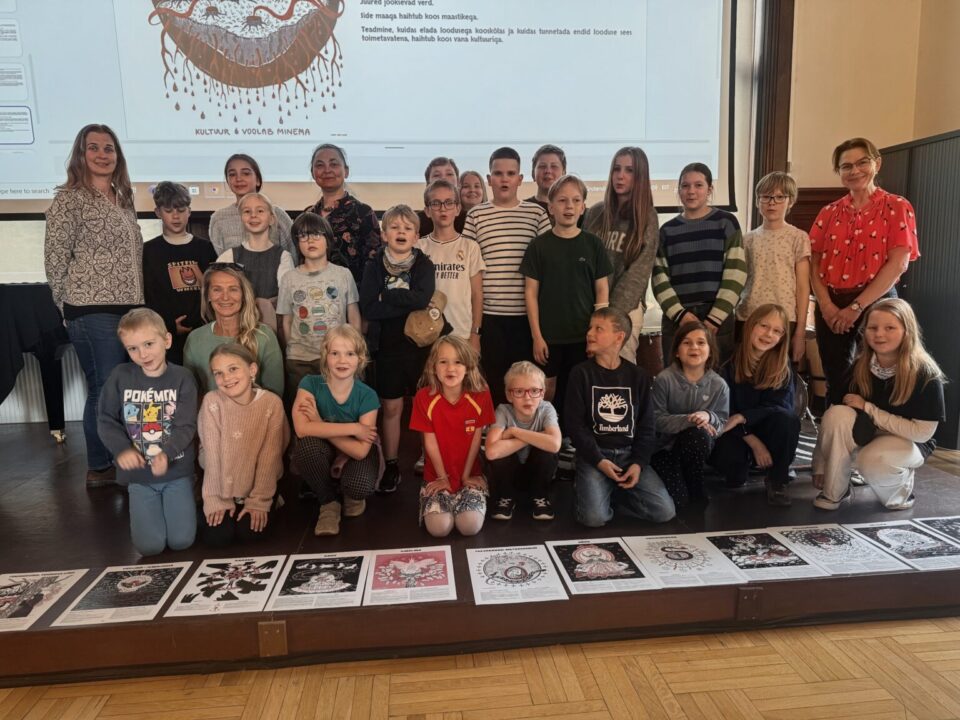
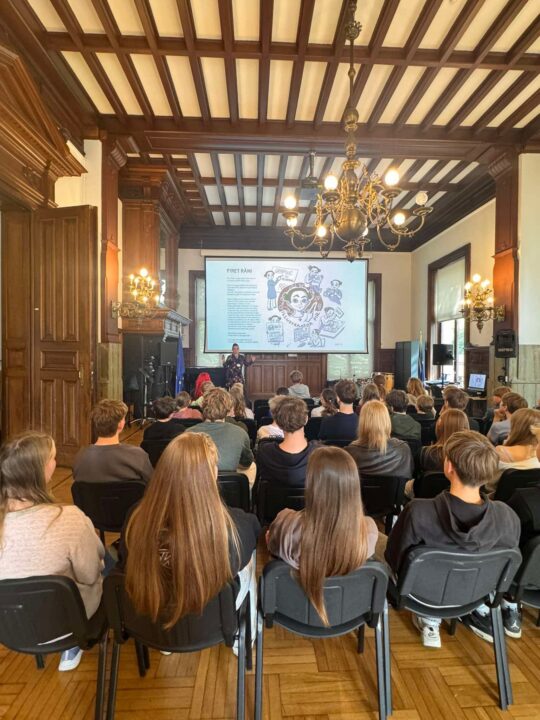
The artist also met with students at the European School, who were inspired by Finno-Ugric animals and creatures to reflect on their own ideas.
FURTHER INFORMATION:
Barbi Pilvre
info@fennougria.ee