106th anniversary of Republic of Karelia
The anniversary of the Republic of Karelia in Russia is 8 June, as the Karelian Workers’ Commune was established on that day in 1920.
Background
The architect of the Karelian Workers’ Commune is considered to be Edvard Gylling, a former member of the Finnish Parliament and an economist, who served as the head of the Karelian government from 1920 to 1935. In his view, the Karelian Workers’ Commune, stretching from the Svir River to the Arctic Ocean, would have helped resolve three problems. First, to highlight the national interests of the Karelian population; second, to end Finland’s claims to East Karelia; and third, to prepare for a revolution in Finland and the Scandinavian countries.
Gylling noted that the commune could serve as a model for Finland and a source of revolutionary agitation in the Scandinavian countries. The driving force behind the Workers’ Commune, however, was to be the Finnish Reds, who had fled the country or were still residing in Finland. “We must not allow Karelian separatism to gain too much influence,” he noted. Gylling viewed the Workers’ Commune as a kind of platform for exporting revolution, not as a result of the Soviet regime’s national policy, which, according to the Communist programme, promised autonomy to the nations.
Anniversary celebrations
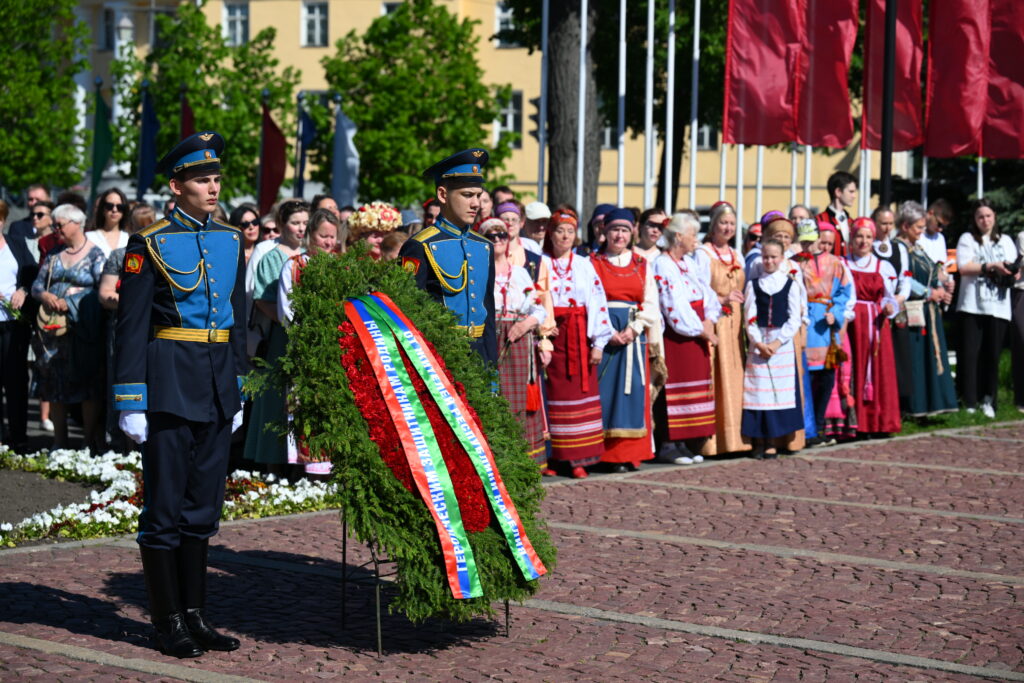
On 8 June, as has been the custom in recent years, the Karelian holiday began with the laying of flowers at the Eternal Flame memorial in Petrozavodsk. Those who fell fighting for their homeland were commemorated, and it was noted that soldiers taking part in Russia’s military operation in Ukraine are fighting for their homeland today. “We are proud of them,” said Elissan Shandalovich, Chairman of the Legislative Assembly of the Republic of Karelia, in his speech. It was not clear from the speech what this has to do with Karelian autonomy.
Traditionally, events dedicated to the republic’s anniversary take place in late August. This time, the Suojärvi district was chosen as the central location—an area that, almost in its entirety, passed from Finland to the Soviet Union at the end of World War II.
On the occasion of the anniversary, the head of the Republic of Karelia, Artur Parfenchikov, congratulated the residents of the republic, noting that the republic has made significant progress both in the economy and in the implementation of social projects. He expressed his gratitude to the republic’s residents and was especially grateful to those who are directly participating in the special military operation in Ukraine and defending their homeland. Unfortunately, once again, not a single word was said on the topic of autonomy.
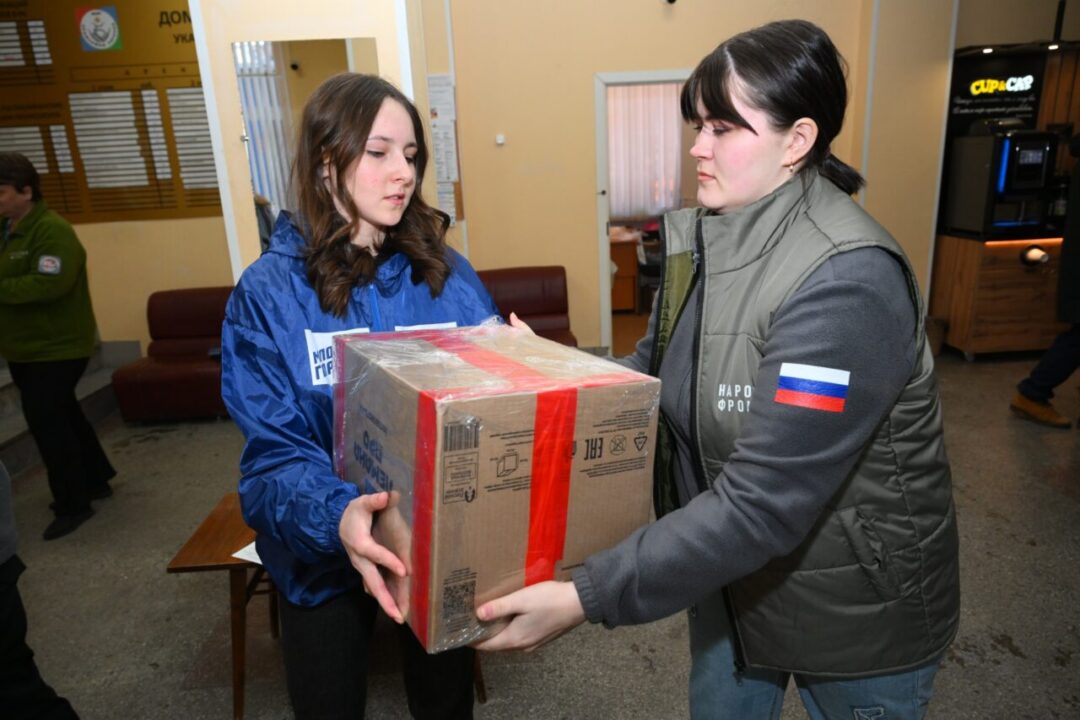
A summary of Karelia’s economic situation was presented, and it was reported that tourism revenue in 2025 amounted to 576 million rubles, which is one-fifth higher than in 2024. The Sortavala region currently generates the most tourism revenue. Karelia’s public debt burden has been reduced by nearly half. Karelia is also the region providing the most humanitarian aid per capita for the Russia-Ukraine conflict, with a total of 500 tons of aid sent. Karelia is no longer among the regions of the Russian Federation with the highest alcohol consumption; consumption has decreased, and the crime rate has also fallen.
Republic of Karelia
As background information for understanding the history of Karelia, which is part of Russia.
In 1923, the Karelian Autonomous Soviet Socialist Republic was established in place of the Karelian Workers’ Commune. In 1940, following the annexation of territories occupied from Finland, it became the Karelian-Finnish Soviet Socialist Republic. In 1956, it was renamed the Karelian Autonomous Soviet Socialist Republic. On August 9, 1990, the Supreme Soviet of the Karelian ASSR adopted a declaration of sovereignty, which was one of the first such declarations in the Russian SFSR. In May 1991, the Karelian Soviet Socialist Republic was established in place of the autonomous republic, which was renamed the Republic of Karelia in November 1991.
The Legislative Assembly of the Republic of Karelia established Republic of Karelia Day as a national holiday in 1999.
- День Республики Карелия — 8 июня 2026 (08.06.2026 Davno.ru, in Russian)
- Карелии 106 лет: главные достижения республики за минувший год (08.06.2026 Respublika, in Russian)
- Матвиенко поздравила жителей Карелии с Днем республики (08.06.2026 PNP, in Russian)
- В День Республики Артур Парфенчиков рассказал о достижениях Карелии (08.06.2026 PTZ-Govorit, in Russian)