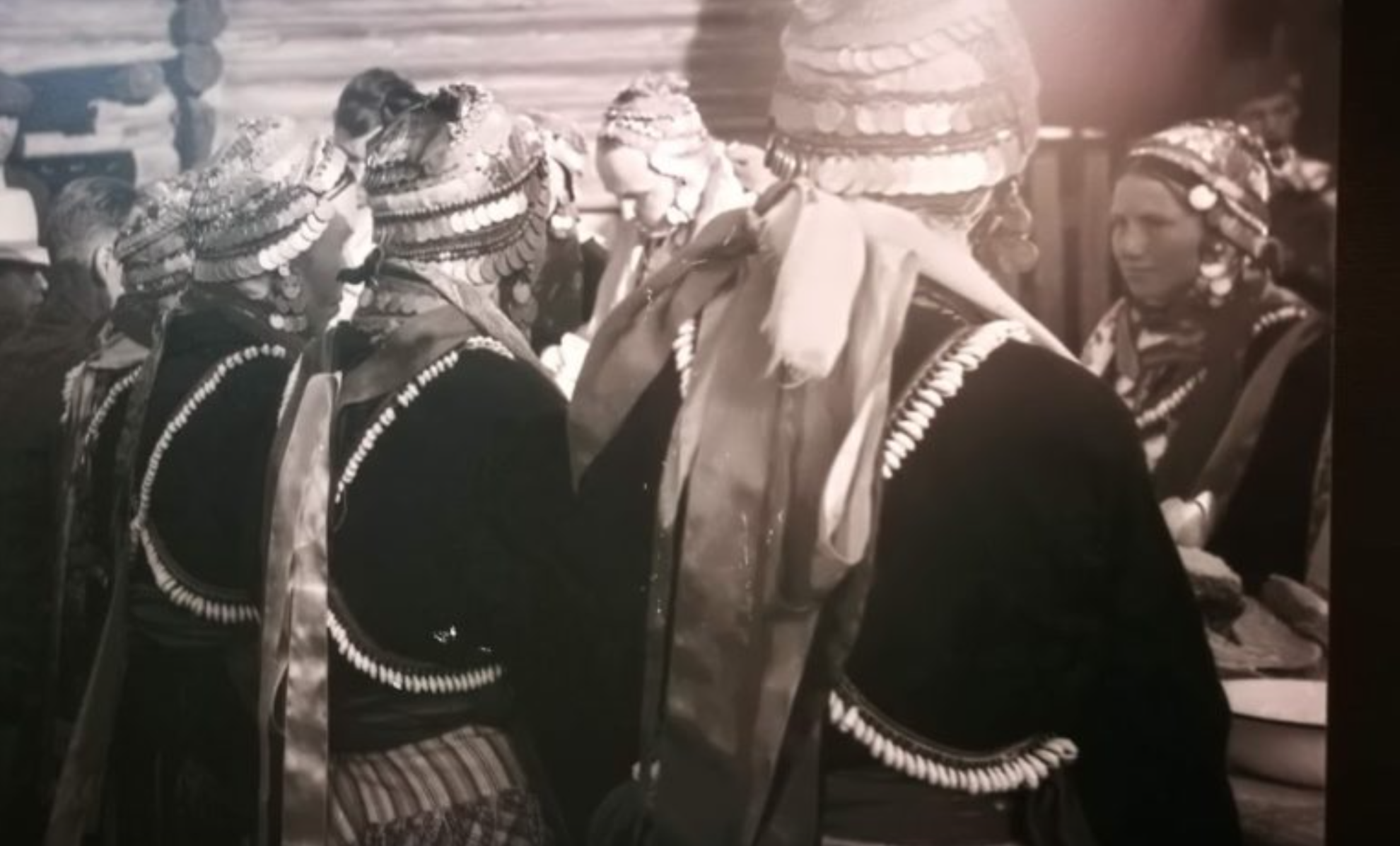
Eggs from the Waterfowl’s Nest
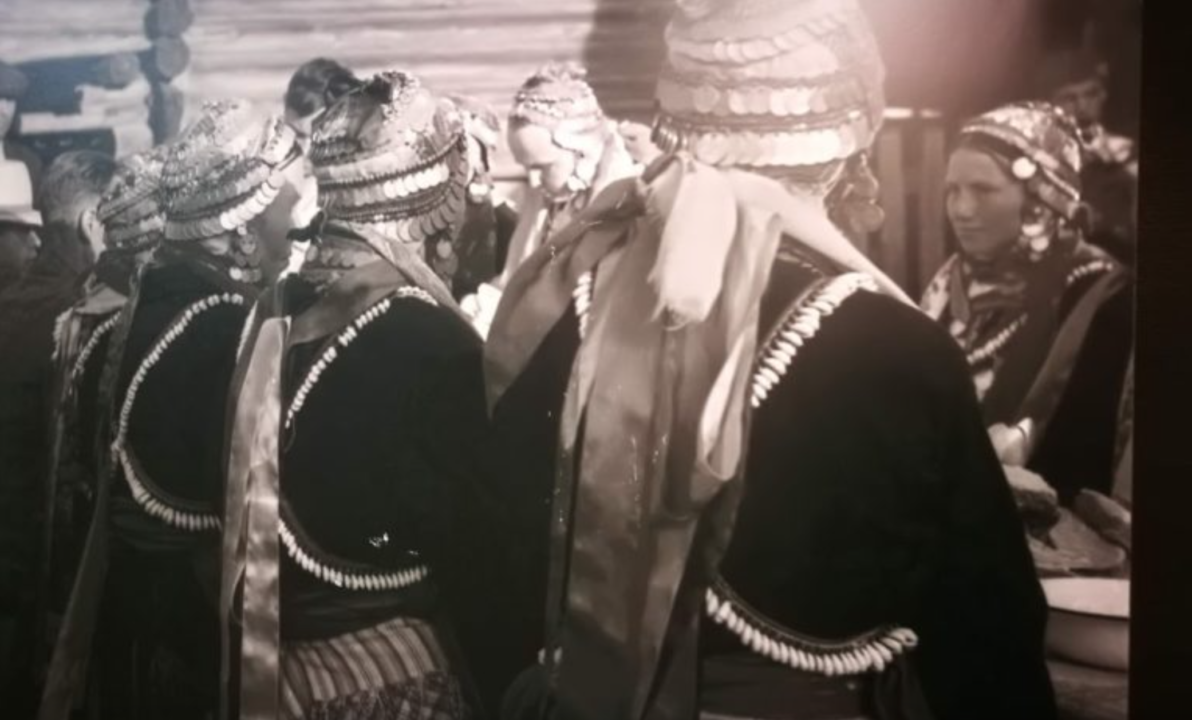
The exhibition "Eggs from the Waterfowl's Nest" consists of photographs taken during expeditions to Finno-Ugric peoples. These images provide an insight into the lives of the Khanty, Nenets, Komi, Mari, Votes, Karelians, and Estonians in the late 1960s and early 1970s.
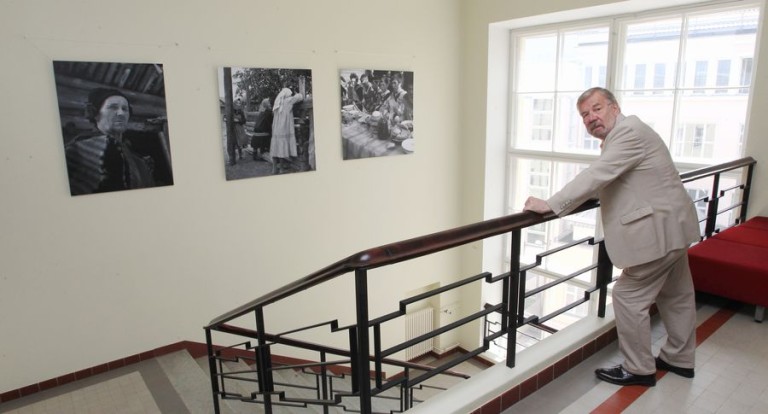
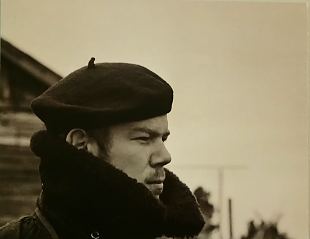
The photographs taken by the distinguished Fennougrist Tõnu Seilenthal in 1966, 1968, 1969, 1970 and 1971 capture moments in the lives of the Estonians and their kindred peoples – the Nenets, Komi, Khanty, Mari, Votes and Karelians. Most of the photos were taken during Lennart Meri‘s film expeditions to Finno-Ugric peoples, where Tõnu Seilenthal was the editor-ethnographer of the film “Veelinnurahvas” (The Waterfowl People). The earliest photo dates back to 11 September 1966, when the last Votic singer, Oudekki Figurova, was photographed in front of her house in the village of Mezhnyaki (Rajo in Votic) in the Leningrad Oblast. According to Tõnu Seilenthal, the woman was wearing the same folk costume in the photo as she was buried in in February 1978.
The negatives of the photos in the exhibition have been digitised and corrected by Enn Säde; several of them have also been used in the information exhibition “The Waterfowl People. Lennart Meri’s film expeditions 1969-1988” and in the 2012-2013 Finno-Ugric Calendar.
The photo exhibition was completed in June 2017 on the occasion of Tõnu Seilenthal’s 70th birthday. A new edition of the exhibition was made in 2024. We recommend viewing the exhibition together with Lennart Meri’s film “The Waterfowl People” (1970).
Tõnu Seilenthal
Tõnu Seilenthal (b. 1947) graduated cum laude from the University of Tartu in 1972 and defended his doctoral thesis on postpositional constructions in the Khanty language at the Hungarian Academy of Sciences in 1977. From 1976 to the present day, he has been a lecturer at the University of Tartu, while also serving as a lecturer in Estonian at the Universities of Helsinki and Jyväskylä. During the turbulent years of 1989–1992, he was the director of the Institute of Language and Literature at the Estonian Academy of Sciences.
Tõnu has been a member of many Finno-Ugric societies and committees, and under his leadership, the IX International Congress of Finno-Ugric Studies was held in Tartu in 2000. Tõnu Seilenthal has been a board member of the Fenno-Ugria Foundation since 1996, and served as its chairman from 2005 to 2007 and from 2013 to 2015. In recognition of his long-term dedicated work at the University of Tartu, Tõnu was awarded the Small Medal of the University of Tartu in 2017. The President of the Republic awarded him the Order of the White Star, Class V, in 2001. In 2017, the Hungarian state awarded Tõnu Seilenthal the Knight’s Cross of the Order of Merit.
Tõnu Seilenthal is a man with a mission, whose activities focus particularly on the Finno-Ugric peoples of Russia. Tõnu’s supportive decisions and words have had a significant impact on the modern Finno-Ugric movement in Estonia and among the Finno-Ugric peoples of Russia. For over twenty years, he has been Estonia’s representative on the Consultative Committee of Finno-Ugric Peoples; he has led the Estonian delegation at all seven World Congresses of Finno-Ugric Peoples. On his initiative, the Paul Ariste Centre for Finno-Ugric Indigenous Peoples was established at the University of Tartu, which he also headed for a long time. On his 60th birthday in 2007, he established the Lennart Meri Waterfowl Fund under Fenno-Ugria to support the creative and charitable activities of young people for the benefit of Finno-Ugric peoples.
Compilers: digitised and corrected by Enn Säde, processed and printed by Seri Design OÜ.
Additional programme: we also help to organise additional programmes to the exhibition - screenings of "Waterfowl People" (1970), meetings with expedition participants, etc.
Volume: 32 easily installable lightweight PVC boards (different sizes). Packed in a transport box. The boards are accompanied by an informational brochure.
Publisher: Fenno-Ugria
Contact and ordering: Janno Zõbin janno@fennougria.ee
Related news

English newsletter!
Fenno-Ugria has started issuing an English-language newsletter. Subscribe to be up to date on the latest Finno-Ugric news!
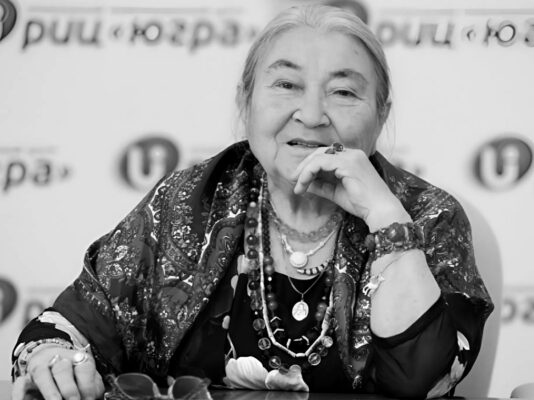
In memoriam Maria Voldina (1936-2026)
The first Khanty poetess and female journalist, Maria Voldina (Vagatova, 28 December 1936 – 15 February 2026), has passed away. She devoted her entire life …
Kindred Club 2026
A new season of Fenno-Ugria’s Kindred Club has begun at the Institute of the Estonian Language (Roosikrantsi 6) on Wednesdays at 5-6 pm. Mark the …