Komi-Permyak Literary Language Day 2026
17 February is the Komi-Permyak Literary Language Day in the Russian Federation, celebrated since 2010. The purpose of this holiday is to popularise the Komi-Permyak language.
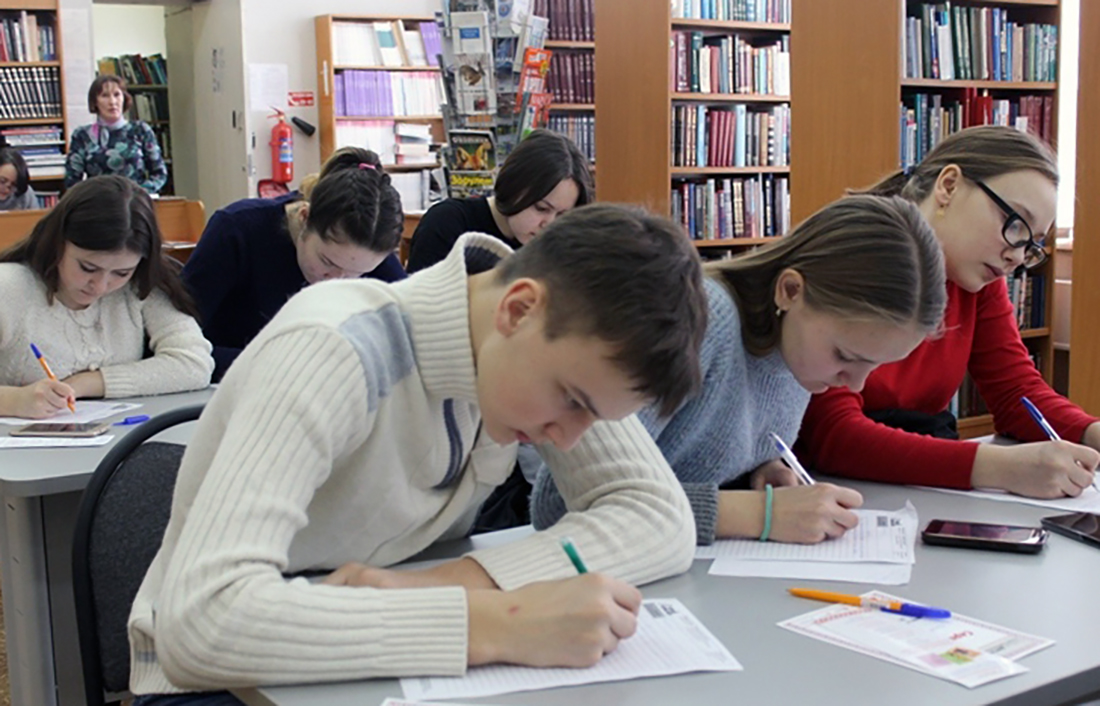
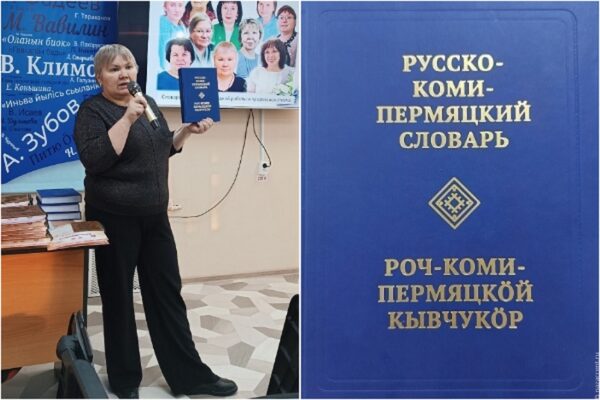
This year, the ‘Komi gizhöt’ campaign was held again, allowing people to send Komi-Permyak-language postcards to any corner of Russia free of charge. At the Kudymkar bus station, passengers were informed in the Komi-Permyak language, and students greeted city residents in Komi-Permyak and distributed Komi-Permyak-language materials. As has become a tradition, a dictation in the Komi-Permyak language was organised, and there was an introduction to the works of Komi-Permyak literary classics, an evening of songs in Komi-Permyak, and a book presentation. The day was thus celebrated in many ways known already from previous celebrations.
However, the actual situation of the Komi-Permyak language leaves much to be desired. According to the latest census, 41,447 people speak the language. Of them, 38,564 people consider it their native language, which is 70% of the Komi-Permyak population. In 1989, 104,715 people considered Komi-Permyak their native language. This means that the number of native Komi-Permyak speakers has decreased by 66,151.
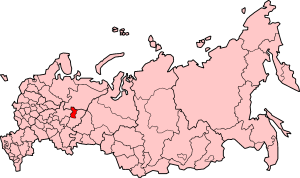
To better understand the status of the Komi-Permyak language today, we present interviews published in 2024, in which the journalist asked respondents to think about what the Komi-Permyak Literary Language Day means, how they intend to celebrate it, and where they think it is possible to learn the Komi-Permyak language. As can be seen from the answers, the respondents do not intend to celebrate the day in any special way. However, learning and knowing the Komi-Permyak language is considered important, but there are also many pessimistic assessments.
Differing opinions
Pensioner Ivan Fedoseyev from the village of Puksib believes that the Komi-Permyak language is dying out at a very rapid pace. ‘Our generation is passing away and the Komi-Permyak language is also falling out of use. Children living in Komi villages already speak completely roch kyv (“Russian”).’ He adds that if anyone is interested in preserving the language, radical measures should be taken, as Ramzan Kadyrov did in Chechnya – he ordered all officials to learn Chechen and use it in their work. The pensioner believes that learning the native language should be made compulsory in all schools. Also, all official Russian-language documents should be translated into Komi-Permyak, and all advertisements and street signs should be bilingual. ‘But no one is going to do these things, which is why our language is dying out, like thousands of others.’
Maria Noskova, director of the National Culture Centre, summed up her thoughts in one sentence: ‘I really hope that understanding will come.’ Noskova says: ‘I was born and raised in Kudymkar, the capital of the Komi-Permyak district. Unfortunately, Komi-Permyak was not taught at school. But I remember that when I was little, my relatives taught me Komi-Permyak words such as pany, nyany… And I found it interesting. It is a great pity that I cannot speak the beautiful literary Komi-Permyak language. I understand the language, but I can only respond at a basic level. We opened a Komi-Permyak language teaching studio at the National Culture Centre, which is open to anyone who wants to visit on Thursdays. Unfortunately, Komi-Permyak is not currently taught in any of the city’s schools, not even as an elective.’
Lack of native-language education
Noskova continues: ‘I personally believe that children should learn the language of their “small homeland”. Currently, we even have the support of the regional governor and the Ministry of Culture and Education. The Institute for Continuing Education for Teachers is also actively working to promote the Komi-Permyak language. Unfortunately, I often hear that parents are against their children learning the Komi-Permyak language, although in some places it is the opposite: the school administration does not want the Komi-Permyak language and literature to be taught in schools. I really hope that we will begin to understand that we are a unique nation with an ancient history and traditions. Tourists and researchers come to us to learn about our national character, so it is important to appreciate, cherish, and preserve the uniqueness of our small homeland.’
An anonymous respondent, a Komi-Permyak language teacher, recalls that they studied the Komi language on an equal footing with Russian. ‘It’s not an easy question, in my opinion the language is dying out. Although various events are being organised to try to preserve something. Currently, very little Komi-Permyak language and literature is taught in schools. One lesson a week is not enough; it is merely an introduction to the language. Previously, Komi-Permyak language and literature were taught on an equal footing with Russian language and literature. Parents and children spoke Komi-Permyak. Now even Komi-Permyak children speak Russian. And even if parents speak Komi-Permyak among themselves, very few children understand it.’
Too little too late
The language teacher continues: ‘There have been attempts to bring language teaching back to schools, but it is not easy. I think this should have been considered earlier, when they started reducing the number of Komi-Permyak language and literature lessons and simply removing this subject from the curriculum. The difficulty now is that the new Komi-Permyak language textbooks use terms that no one understands. When we were learning our native language, everything was easier. My family and I speak Komi-Permyak at home. The children understand Komi-Permyak, but they don’t speak it. Of my three children, only the oldest speaks Komi-Permyak, even though I spoke Komi-Permyak with them before I sent them to kindergarten. In kindergarten, however, everything is taught in Russian. As a result, the children do not understand their native language.’
The living language
Tatyana Merkusheva, researcher at the Komi-Permyak Institute of Teacher Training, says that the language is alive. ‘I say that the language is alive, the language lives and will continue to live in the future, because I speak Komi-Permyak. If we look at what is being done to promote the development of the language, we see that a Komi-Permyak language development programme is being implemented. We teach the Komi-Permyak language in schools. We can say with confidence that the language will not die out. And if the language is taught in schools, then children will grow up speaking Komi-Permyak.’
‘When the Gorav komi kyv (“Let’s speak Komi”) campaign takes place, students from almost all schools participate. The students also take part in literary competitions. The number of participants in the annual dictation tests is also increasing. The Komi-Permyak language has been part of our education system since the 20th century. Today, second, third, and fourth graders have Komi-Permyak language textbooks. Now we have started working with kindergartens. The language is alive.’
Inferiority complex
Olga Yeltsova, deputy head of the Kudymkar city administration, is proud to know the Komi-Permyak language. She says: ‘We speak Komi-Permyak at home, as both my husband and I are Komi-Permyaks. I also speak Komi-Permyak with some of my colleagues. Sometimes I even find that I can express myself better and even think better in Komi-Permyak. I am glad that I know Komi-Permyak, it also helps me at work. I see that people come to the reception who find it easier to express themselves in Komi-Permyak. Then I suggest switching to the Komi language. People feel more comfortable that way. There have also been cases where people simply ignore Russian and speak only Komi at the city government, and then of course I intervene. But it hasn’t always been that way.’
Yeltsova continues: ‘For example, I used to have an inferiority complex because I spoke Russian with an accent. Now, however, that is over, and I proudly emphasise that I am a Komi-Permyak and know the Komi-Permyak language. I believe that in order to preserve the Komi-Permyak language, we adults should treat the language with care. We should know and love our mother tongue, and pass on that love to our children. It all starts with the family.
‘Today, I regret that in my youth I did not realise the importance of my mother tongue and did not teach my daughter to speak Komi-Permyak. She does, however, understand it and speaks it a little. My granddaughter, on the other hand, considers herself Komi-Permyak. She learns Komi-Permyak words, uses them in conversation, and is proud to have been born in Kudymkar. The Komi-Permyak language is my mam kyv (“mother tongue”). It is my connection to my homeland, where I was born and raised.’
Natural bilingualism
Mikhail Votinov, a teacher at an agricultural college, regards the Komi-Permyak language as close to his heart and soul. ‘I have spoken Komi-Permyak since I was a child. I consider myself a native Komi-Permyak, and it is fundamentally valuable to me. Everything that happens in the Komi-Permyak community is close to my heart and soul. This is because the Komi-Permyak people are very kind, peaceful, and interesting, with a rich history, who live a peaceful and quiet life. My wife and I also speak Komi-Permyak at home, sometimes mixed with Russian, and we don’t even notice it. I believe that a person should know at least two languages. I myself feel that when I think and speak in two languages, my brain works much more actively and productively. However, the Komi-Permyak language is no longer pure and perfect; it has many Russian loanwords.’
‘There was a funny incident when a businessman approached me and asked me to translate from Komi-Permyak into Russian. He was interested in what his wife was saying to her Komi-Permyak friend. The businessman suspected his wife of being unfaithful. He had recorded the conversation and asked for a translation, paying me a few thousand rubles in advance and later adding another thousand.’
‘However, a lot is being done in our district to preserve the language, with events taking place at the folk culture centre and cultural centres. I believe that the Komi-Permyak peoples were, are, and will remain true patriots of their homeland and culture, passing it on from generation to generation. Just as my grandmother passed it on to my mother, and my mother passed it on to me. I too will pass it on to my students and, in the future, to my children and grandchildren.’
The musical Komi language
Julia Belyaeva, chief director of the Komi-Permyak National Theatre, believes that the Komi-Permyak language is an absolutely authentic world of sounds. ‘Of course, I am quite an outsider’, Belyaeva says. ‘In my life, I have only staged one play in the Komi-Permyak language, and even that was not really a play, but rather a musical evening called Tov (‘Winter’). It was based on the actors’ memories of their childhood, or rather, the Komi-Permyak culture. It was very interesting and a discovery for me, thanks to which I got to know the world and life of this people more deeply.’
‘It is a complex but at the same time delicate topic. There is no problem communicating with the actors, they all speak Russian perfectly and understand each other. However, choosing a play is difficult because if the text is too prosaic, it does not fit into the Komi-Permyak language. But there are no problems with Gogol’s texts, for example, because his texts have a kind of folk color that fits well with the Komi-Permyak language.’
‘I recently visited Karelia, Petrozavodsk, where there is an excellent drama theatre. I watched a play in the Karelian language and noticed that everyone in the audience was wearing headphones, whereas in our theater, people sit without headphones. It was amazing: people came specifically to hear their language and feel proud that they have such a rich culture, their own rich, interesting, absolutely authentic world of sounds. I take this very seriously and understand how important theatre is in preserving this world. It is necessary to popularise the language, and we are constantly thinking about how to redefine the status of the national theatre — what a national theatre should be like.’
The future of Komi-Permyak
Galina Botalova, a pensioner living in the village of Yusva and a former teacher, believes that there is actually quite a lot written in Komi-Permyak on the Internet. ‘We speak Komi-Permyak from morning till night, from birth to death. I love this language, it is my mother tongue. In all the villages and in Yusva, everyone around me speaks Komi-Permyak, you rarely hear any Russian words. I speak Komi-Permyak with pride and even among Russians I am not ashamed of my language and always speak Komi-Permyak. Of course, if they don’t understand, I can speak Russian, but otherwise I always speak Komi-Permyak.’
‘I studied Komi-Permyak from first grade, and we also had Komi-Permyak as a subject at teacher training college. After that, I taught at school myself, teaching Komi-Permyak to children, and they enjoyed learning it. Now, every year, I write a Komi-Permyak dictation, always receiving an “excellent” grade. I receive letters of thanks and gifts. My 91-year-old aunt, who lives in Arkhangelsk, also wrote a test and received a grade of “very good”.’
So that the Komi-Permyak language is not forgotten, there is now a lot of writing in Komi-Permyak on the internet, songs are being translated, and books are being published. We must know our language and our roots. My grandchildren also want to learn Komi-Permyak; for example, one of them wants me to sing Komi-Permyak songs to him. Of course, children must be taught their native language at school so that the language is preserved, and Komi-Permyak must be spoken in the family.’
Official policy
Vitali Bayandin, Head of the Department of Ethnocultural Development at the Perm Krai Ministry of the Komi-Permyak Okrug, believes that language is wealth. ‘The Komi-Permyak language instruction is organised in all municipal educational institutions in the Komi-Permyak Okrug, with the exception of the Yurlinsky District. There are 31 schools, but only 2,032 children study the Komi-Permyak language out of a total of 14,000 schoolchildren. Sixteen schools offer introductory courses in the Komi-Permyak language and literature, but these are optional and not part of the curriculum.’
When asked about the situation of the language, the official replied: ‘Unfortunately, I do not have any recent data to give an assessment. I can only rely on census data and survey data concerning the need to teach the Komi-Permyak language. The census data showed that the number of Komi-Permyak speakers has decreased by half. Surveys show that each successive generation is less and less proficient in the Komi-Permyak language. At the same time, 70% of people say that Komi-Permyak should be taught in schools, and even many opponents of the Komi-Permyak language believe that people should know their native language. Thus, the attitude towards the Komi-Permyak language is positive.’
He describes his own attitude as follows: ‘The Komi-Permyak language is my mother tongue, it is the language of my parents and ancestors. I speak my mother tongue with my family, close relatives, friends and acquaintances, and colleagues. I read Komi-Permyak-language news publications, but also classics.’
Uniqueness of Komi-Permyak
‘It may sound lofty, but for me, the Komi-Permyak language is the wisdom of my ancestors, a special way of perceiving the world’, Bayandin continues. ‘I really like Nadezhda Maltseva’s observations on how different peoples perceive objects and how this is reflected in their languages. The Komi-Permyak language is very rich in untranslatable onomatopoeic word pairs. For example, dzurk-virk, gilj-golj, gilya-golya, turki-parki, kurni-verni, zhyn-zhyn, lig-lyog, etc. And how much wisdom there is in Komi-Permyak proverbs and folk tales. This is a treasure that no sane person should give up.’